home / guides/how-much-does-a-los-angeles-kitchen-remodel-cost
Kitchen Remodeling · October 16, 2026 · 7 min read
How Much Does a Los Angeles Kitchen Remodel Cost?
Learn what homeowners can expect to pay for a kitchen remodel across Los Angeles neighborhoods, including timelines, material impacts, and how to compare bids.
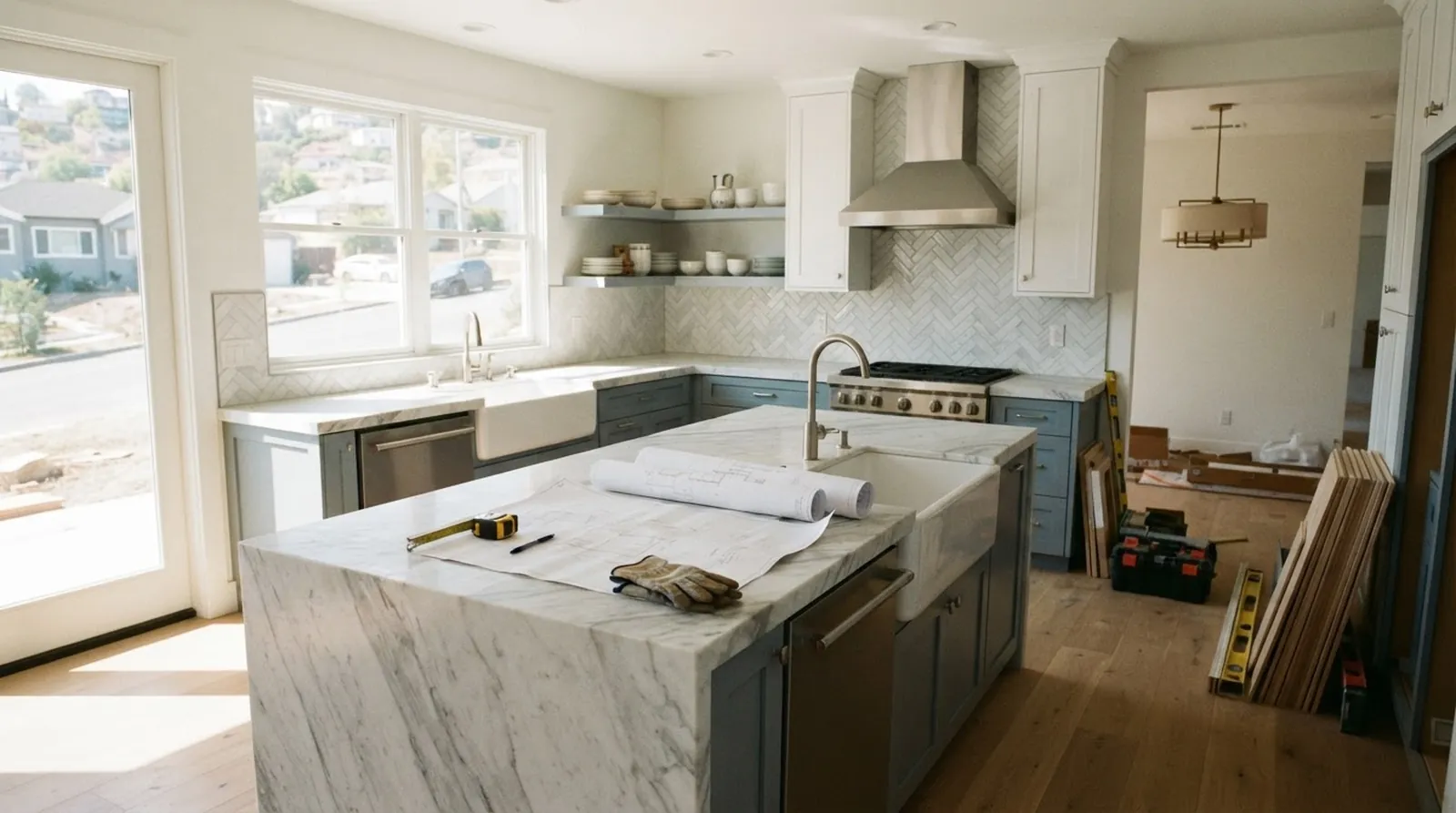
A kitchen renovation often serves as the most significant investment a homeowner makes after purchasing the property itself. Residents across Los Angeles know that updating this central space improves daily life and influences property value. Yet finding accurate pricing information feels like an impossible task when every house and contractor operates differently.
The reality of construction pricing is that neighborhood location, material choices, and local permitting requirements all intersect to create your final bill. A project in a specific zip code might carry a completely different price tag than the exact same layout a short distance away. Homeowners need a clear framework to understand these variations before they start requesting bids.
As an independent contractor matching service, LA Premier Builders helps homeowners compare options without pressure. We do not employ crews, hold a license, or build projects. Instead, we provide the education you need to evaluate professionals and make an informed choice. Here is a look at what drives the price of upgrading your cooking space.
The baseline cost of a Los Angeles kitchen
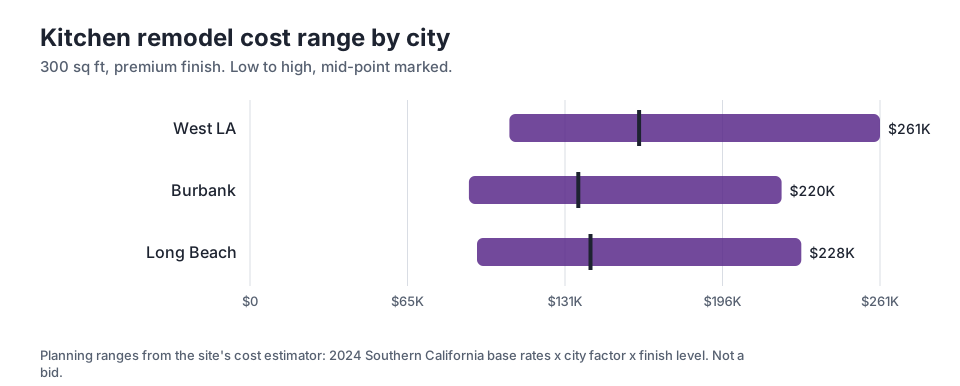
Location dictates a significant portion of your construction budget. When estimating a 300 sq ft kitchen remodel with premium finishes, the numbers shift noticeably depending on where you live. For example, the mid-point estimate for this project in West LA sits at $161K. Contractors operating in this area often face higher insurance premiums, longer commute times for their workers, and stricter parking enforcement, all of which get factored into the overhead.
Moving just a short distance changes the financial picture. In Burbank, that same project has a mid-point estimate of $136K. The difference does not necessarily mean you are getting lower quality work. Instead, it reflects the localized cost of doing business. Less congested streets, different municipal fee structures, and easier site access allow teams to work more efficiently, which translates to a lower baseline price.
When you review the accompanying chart, you will notice that even within the same neighborhood, the range between the low and high estimates is substantial. A contractor bidding on the lower end might run a smaller operation with minimal office staff, while a higher bid could come from a firm offering dedicated project managers and extensive warranties. Understanding these baseline figures gives you a solid foundation for your initial budget discussions.
How materials change your bottom line
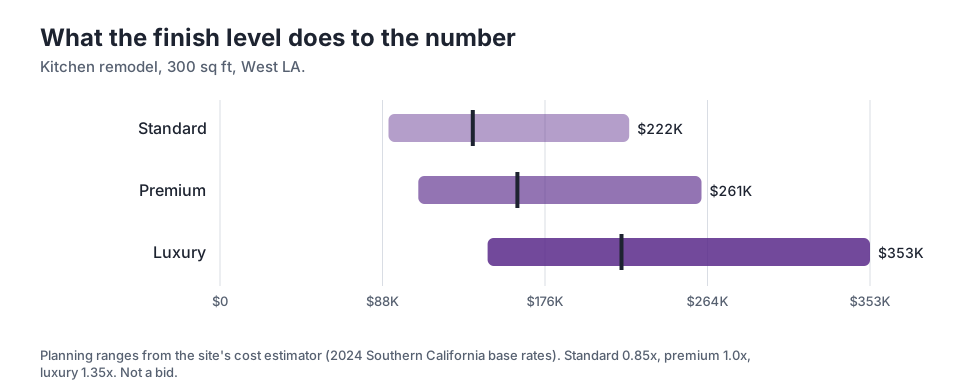
Beyond your zip code, the materials you select exert the heaviest influence on your final invoice. The shift from basic components to high-end custom features dramatically alters the project scope. Looking at the chart for a 300 sq ft space in West LA, moving to a luxury finish level applies a 1.35x multiplier to the baseline costs. The mid-point estimate for this luxury tier reaches $218K, driven by custom cabinetry, imported stone, and professional-grade appliances.
Conversely, choosing a standard finish level applies a 0.85x multiplier, bringing the mid-point estimate down to $137K. Standard finishes typically involve semi-custom or prefabricated cabinets, reliable but mass-market appliances, and more common countertop materials like quartz or standard granite. The layout and structural work remain identical, but the visible surfaces change the financial equation entirely.
Homeowners must decide where to allocate their funds based on how they use the room. If you are an avid cook, investing in luxury appliances might take precedence over custom cabinet routing. If you are updating an investment property, standard finishes often provide the best return on investment. A reputable contractor will help you navigate these choices, showing you where to spend and where to save to meet your specific goals.
The timeline from design to dinner
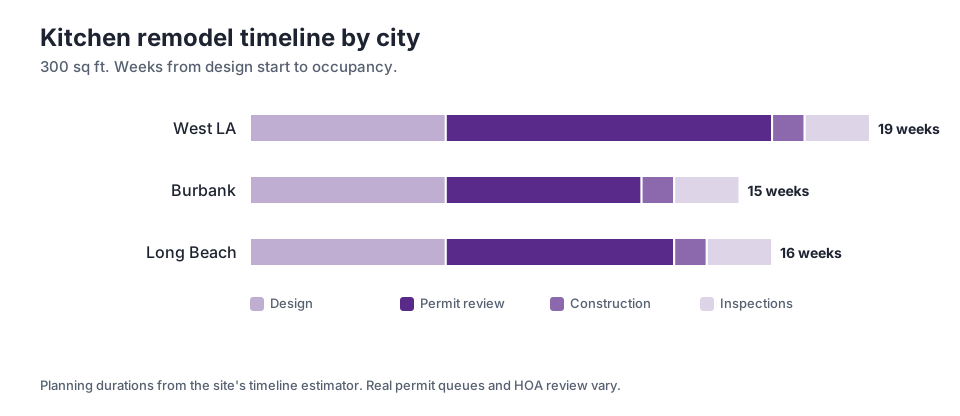
Time is money in construction, and the duration of your project impacts both your sanity and your wallet. The timeline for a 300 sq ft kitchen renovation involves distinct phases: design, permit review, construction, and final inspections. The municipal bureaucracy in your specific city plays a massive role in how long you will be cooking on a hotplate in your living room.
As the timeline chart shows, the permit review phase creates the largest bottleneck for many homeowners. In West LA, you can expect the permit review to take 10 weeks. This administrative waiting period happens before the first hammer swings. By contrast, the same review process in Burbank typically takes 6 weeks. These municipal delays require contractors to adjust their schedules and sometimes charge more to cover the administrative burden of navigating complex city departments.
When you add up all the phases, the total duration varies significantly. The entire process from design start to occupancy in West LA takes 19 weeks. Knowing this timeline helps you plan your life around the disruption. It also explains why contractors structure their payment schedules the way they do, as they must maintain cash flow through long periods of municipal waiting.
Navigating the contractor matching process
Finding the right professional requires more than just checking online reviews. The Los Angeles market is saturated with companies claiming to be the best, making it difficult for homeowners to separate genuine expertise from clever marketing. This is where an independent matching service provides real value. LA Premier Builders matches homeowners with contractors, with no pressure. We connect you with professionals who have a history of successful projects in your specific neighborhood.
Our role is strictly to facilitate introductions and provide you with the tools to make an informed decision. We do not build projects, we do not employ construction crews, and we do not hold a contractor license. Our independence means we have no incentive to push you toward any specific company. You remain in complete control of who you interview, how many bids you collect, and who you ultimately hire.
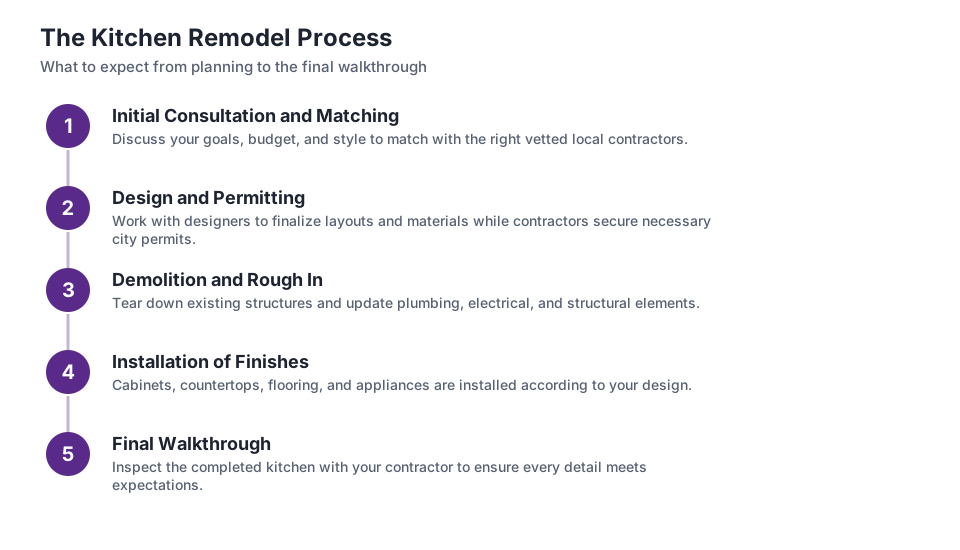
As outlined in the steps graphic, using a matching service involves a structured approach to your search. The process typically begins with a detailed discussion of your goals, budget, and timeline. From there, you receive introductions to a curated list of professionals. You can then interview these contractors, review their portfolios, and request detailed estimates, all without facing high-pressure sales tactics.
Making sense of your estimates
Once you start receiving bids from different contractors, the real work begins. Comparing estimates is rarely a straightforward task because every company formats their proposals differently. A contractor might provide a flat total figure, while another delivers a highly itemized spreadsheet detailing every screw and hinge. Homeowners must learn to read between the lines to ensure they are comparing equivalent scopes of work.
The most common mistake first-time renovators make is automatically selecting the lowest bid. A price that comes in significantly under the others usually indicates missing items rather than a great deal. The contractor might have excluded the cost of permits, assumed you are keeping your old appliances, or budgeted for the cheapest possible materials. Always ask contractors to clarify exactly what their estimate includes and, more importantly, what it excludes.
Pay close attention to allowances. An allowance is a placeholder amount for materials you have not yet selected, such as tile or lighting fixtures. If a contractor sets these allowances unrealistically low, their bid will look attractive, but your actual costs will skyrocket once you start shopping. Ask each professional to explain their allowance figures and confirm they align with the quality level you expect for your home.
Preparing for the unexpected
No matter how carefully you and your contractor plan, remodeling an existing structure always involves surprises. This is especially true in Los Angeles, where many homes were built decades ago under outdated building codes. When the demolition crew removes the drywall, they might discover corroded plumbing, dangerous electrical wiring, or structural damage from past leaks. These hidden issues must be addressed before the aesthetic work can continue.
To protect yourself from financial stress, you need a contingency fund. This is a portion of your budget set aside specifically for unforeseen problems. Most industry experts recommend keeping a reserve fund equal to a portion of your total project cost. If you do not need it, you simply save the money, but having it available prevents a sudden halt in construction when the city inspector demands a plumbing upgrade.
A transparent contractor will discuss potential risks before you sign a contract. They should walk through your home, point out areas of concern, and explain how they handle change orders. A change order is a formal document detailing the extra work, the additional cost, and the impact on the timeline. Establishing a clear process for handling surprises ensures that your relationship with your builder remains positive even when challenges arise.
The value of clear communication
The success of your kitchen renovation depends entirely on the quality of communication between you and your chosen professional. Before construction begins, establish how and when you will receive updates. Some contractors use dedicated software portals where you can view daily logs and photos, while others prefer regular site meetings or phone calls. Choose a professional whose communication style matches your preferences.
Do not hesitate to ask questions throughout the process. If you do not understand why a certain material is recommended or why a specific phase is taking longer than expected, speak up. A reputable builder respects an engaged homeowner and will gladly explain their methods. Remember that you are the client, and you have the right to understand what is happening in your home.
Taking the time to educate yourself, compare multiple bids, and establish clear expectations leads to a better remodeling experience. Understanding the regional cost differences, the impact of material choices, and the reality of municipal timelines positions you for success. A methodical approach ensures your new kitchen meets your functional needs and aesthetic desires without unnecessary financial stress.
Key takeaways
- Location heavily influences your baseline costs, with different neighborhoods carrying distinct overhead and permitting expenses.
- Material selections drive the final price, as moving from standard to luxury finishes can drastically multiply your budget.
- Municipal permit reviews often cause the longest delays before construction even begins, varying widely by city.
- Always compare detailed estimates rather than just looking at the bottom-line number to avoid missing scope or low allowances.
Questions
Frequently asked questions
Why do bids for the exact same kitchen layout vary so much?
Bids vary because contractors have different overhead costs, profit margins, and ways of estimating materials. One might include premium allowances and dedicated project management, while another offers a bare-bones approach with standard materials.
Does LA Premier Builders provide the construction estimate?
No, we are an independent matching service. We match homeowners with contractors, with no pressure. We connect you with local professionals who will evaluate your space and provide their own detailed estimates. We do not build, employ crews, or hold a contractor license.
How do material choices affect the timeline?
Custom materials, like imported stone or custom-built cabinetry, often require long lead times for manufacturing and shipping. Standard, prefabricated materials are usually available locally, which can help keep the project moving faster.
What happens if the contractor finds bad plumbing behind the walls?
Hidden issues require a change order. The contractor will stop work in that area, assess the problem, and provide a document detailing the cost and time required to fix it before proceeding.
Are permit fees included in the contractor's bid?
This depends entirely on the contractor. Some include pulling permits and the associated fees in their total price, while others list it as an exclusion that the homeowner must pay directly to the city. Always ask for clarification.
Take the next step
Describe your project and see how matching works, with no pressure.