home / guides/permits-costs-burbank-santa-monica-long-beach
Remodeling Costs & Timelines · November 9, 2026 · 8 min read
Permits & Costs: Burbank, Santa Monica, Long Beach
Compare remodeling permit timelines and costs in Burbank, Santa Monica, and Long Beach. Learn how city rules impact your construction schedule and budget.
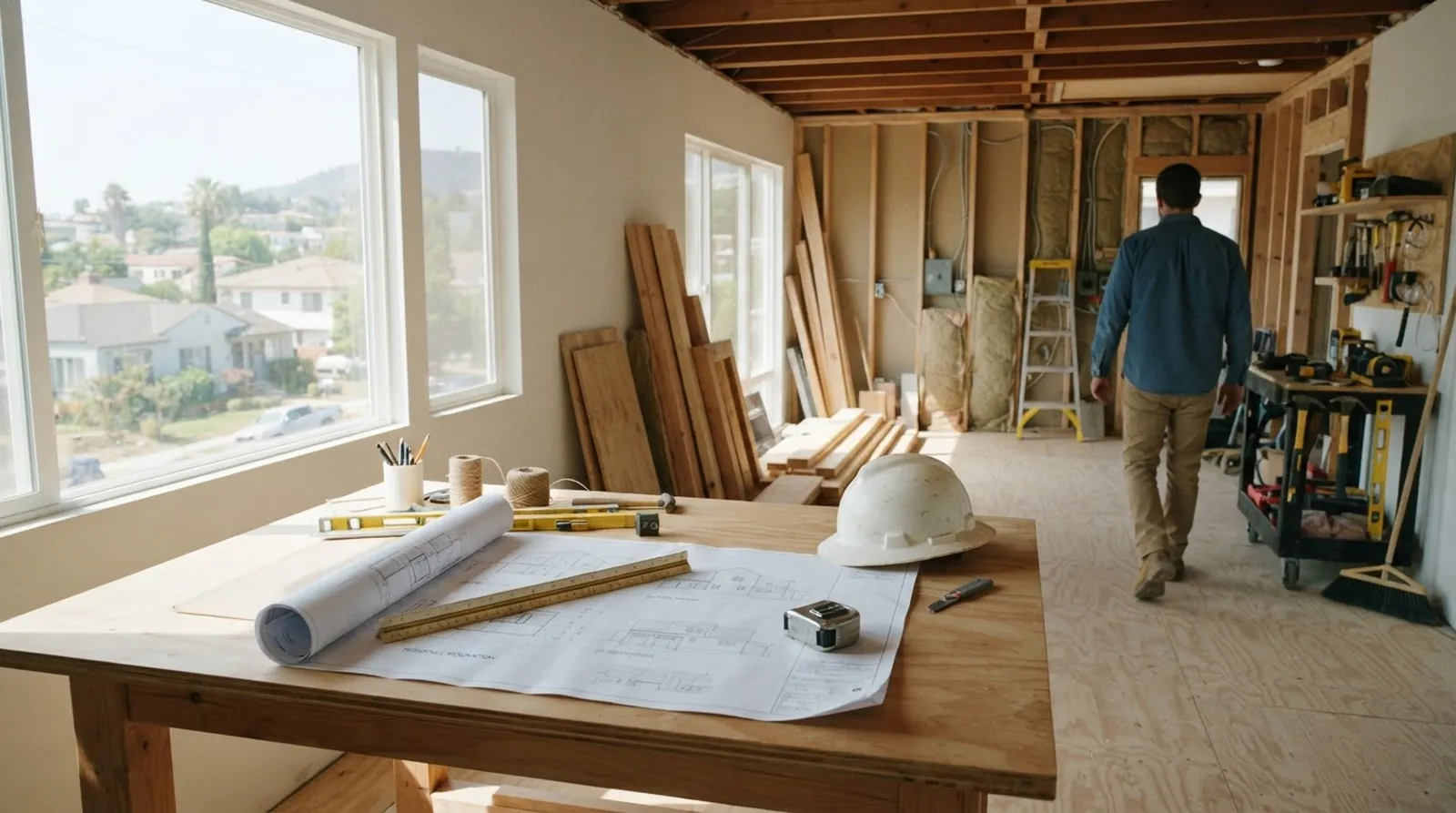
Planning a major home renovation in Los Angeles County means dealing with several different city governments, each operating under its own set of rules. The city you live in dictates a large portion of your timeline and budget before a single hammer ever swings on the job site. A whole home remodel in Santa Monica will follow a very different path than the exact same project located in Burbank or Long Beach. Understanding these municipal differences is an important step toward a successful renovation.
Homeowners often ask us why their neighbor completed a project faster or cheaper, or why a friend in another town had such a different experience. The answer usually comes down to local building departments, zoning laws, and municipal requirements. Grasping these local differences helps you evaluate contractor bids accurately and set realistic expectations for your family. If you do not account for city specific delays, you might find yourself renting a temporary home for much longer than you originally planned.
At LA Premier Builders, we match homeowners with contractors. We do not construct projects, employ construction crews, or hold a contractor license ourselves. Instead, we provide the objective information you need to compare your options with absolutely no pressure. Let us look closely at how permit timelines, construction schedules, and overall planning costs vary across these distinct Southern California cities, and what that means for your upcoming remodel.
How City Plan Review Shapes Your Timeline
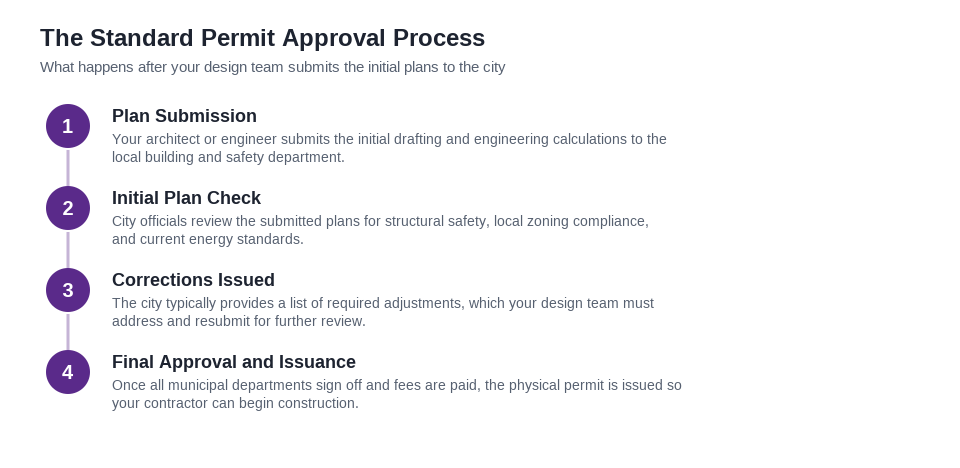
Every major residential remodel requires a comprehensive city plan review. During this critical phase, municipal officials examine your architectural drawings to ensure they meet local safety standards, zoning restrictions, and energy codes. This step happens after your designer finishes the initial plans but before construction can legally begin on your property. It is a mandatory waiting period that every homeowner must endure, but the length of that wait is entirely dependent on your address.
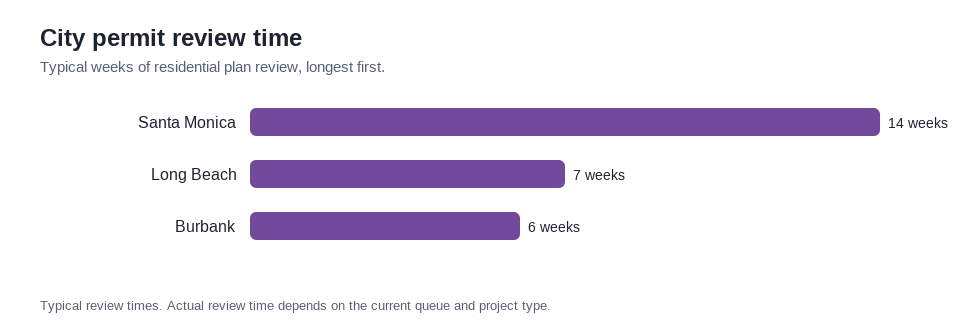
The duration of this review varies wildly from one city to the next across the Los Angeles area. Municipal staffing levels, the complexity of local regulations, and the sheer volume of permit applications all play a role in how fast your plans move through the system. As shown in the accompanying chart detailing typical timelines, you might wait 6 weeks for this process in Burbank. That represents a relatively efficient municipal workflow for a major renovation.
By contrast, the wait stretches to 14 weeks in Santa Monica. That difference alone adds significant time to your holding costs if you are renting another house or paying a mortgage on an empty property during the remodel. The extended timeline reflects a much more involved review process requiring sign offs from multiple specialized city departments.
Long Beach sits between the two extremes, requiring 7 weeks for the same review process. When you start interviewing professionals for your project, asking them about these specific timelines is a great way to gauge their local expertise. A contractor who promises to get your Santa Monica plans approved quickly is likely not giving you realistic information.
Total Project Schedules from Design to Move In
When you look at the entire lifecycle of a residential remodel, the city review is just a single piece of a much larger puzzle. A standard project timeline includes the initial design phase, the permit review, the actual construction work, and the final inspections. Delays in any single one of these phases will push back your final move in date. Understanding how these phases stack up helps you plan your life around the renovation.
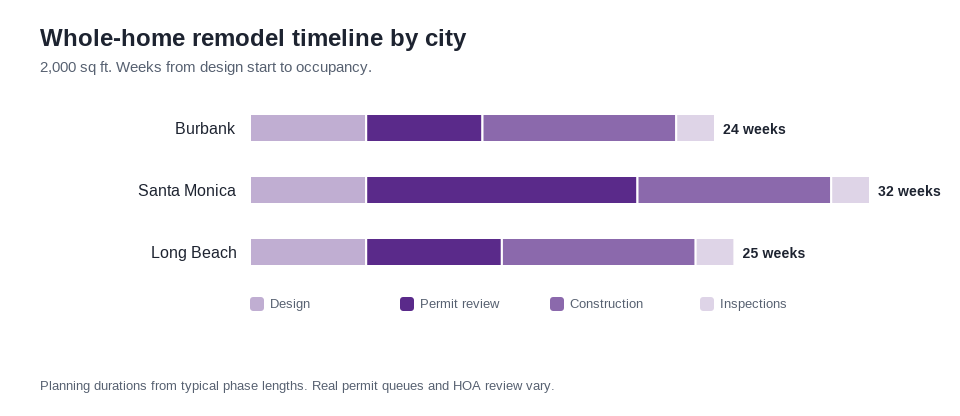
Consider the schedule for a 2,000 sq ft whole-home remodel. The physical construction phase itself might take 10 weeks regardless of where you live, assuming there are no major supply chain issues or unexpected structural problems hidden behind the walls. The design phase and the final inspections also remain relatively constant across different municipalities, taking up similar amounts of time on the calendar.
However, the total duration shifts drastically because of the permit review period. In Burbank, the total from design start to occupancy is 24 weeks. This allows homeowners to complete a major renovation in a predictable timeframe. Moving the exact same project to the coast changes the math entirely. In Santa Monica, the total from design start to occupancy is 32 weeks.
Long Beach offers a timeline closer to the inland cities. There, the total from design start to occupancy is 25 weeks. Knowing these total schedule projections helps you negotiate your living arrangements, secure appropriate financing terms, and avoid the frustration of a project that feels like it is dragging on forever. It also provides a baseline to check against the schedules proposed by the contractors you interview.
Why Coastal Cities Require More Review Time
You might wonder why a coastal city requires so much more time for administrative approval than an inland community. Santa Monica enforces strict environmental and historical preservation standards. These local mandates often exceed the baseline state building codes, requiring additional documentation, energy modeling, and specialized review from multiple city departments before a permit is issued.
Municipal reviewers check for compliance with green building ordinances, water conservation rules, and specific zoning restrictions meant to preserve neighborhood character. If your initial architectural plans lack any required detail, the city will send them back for corrections. This correction cycle restarts the clock on certain review phases, adding significant delays to the overall timeline.
Properties located near the ocean face an additional layer of regulatory scrutiny. If your home falls within the coastal zone, you may need approval from the California Coastal Commission. This state agency protects coastal access and environmental resources, and their review process operates independently from the city building department, adding another potential bottleneck to your schedule.
This is exactly why hiring a contractor and design team familiar with local codes is critical. An experienced local team anticipates these stringent requirements and submits comprehensive plans the very first time. As a matching service, we always suggest asking potential contractors about their specific track record navigating the building department in your exact city.
Comparing Overall Remodeling Costs
Time directly influences money in the construction industry. Extended permit reviews mean higher holding costs, longer equipment rental periods, and more administrative hours billed by your architect and engineering team. Furthermore, cities with stricter building codes often require more expensive materials, specialized labor, and advanced technology to meet their energy and structural standards.
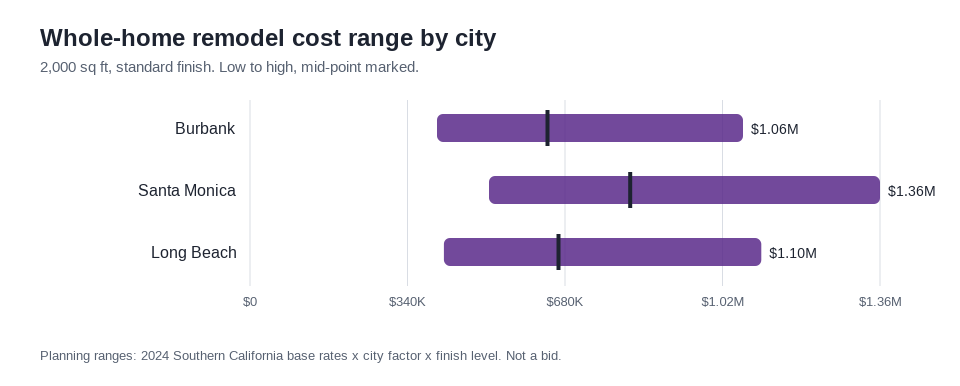
Looking at the cost ranges for a 2,000 sq ft project with a standard finish, the financial impact of your location becomes quite clear. The mid-point estimate in Burbank sits at $642,600. This figure provides a solid baseline for a comprehensive interior and exterior update in a relatively business friendly municipality.
The exact same size and finish level in Santa Monica has a mid-point of $821,100. That represents a significant premium simply for building in a highly regulated coastal environment. Long Beach offers a middle ground for homeowners, with a mid-point of $666,400 for the same scope of work.
These figures represent planning ranges rather than formal bids, but they clearly highlight how municipal location changes your baseline budget. Homeowners must account for these geographic premiums when securing construction loans, setting aside cash reserves, or deciding whether a major renovation makes financial sense for their property.
The Impact of Local Zoning Laws
Beyond the building codes that dictate how a structure is put together, local zoning laws heavily influence what you are actually allowed to build. Cities limit how tall you can build, how close you can build to the property line, and how much of your total lot can be covered by structures. These rules are designed to prevent homeowners from building large additions that block neighbor views or alter the established streetscape.
Navigating these zoning rules requires careful planning and a deep understanding of municipal priorities. A design that sails through approval in a spacious inland neighborhood might be rejected outright on a dense street near the beach. Discussing zoning constraints with your contractor and architect early in the process prevents costly redesigns later.
In highly regulated areas, you might also encounter design review boards or architectural commissions. These panels of local citizens and professionals evaluate the aesthetic impact of your remodel. They can dictate choices regarding exterior paint colors, window styles, and landscaping, ensuring your home blends in with the surrounding community.
Preparing for a design review board adds time and expense to the planning phase. Your architect will need to create detailed renderings and present them at public hearings. When comparing contractors, ask if they include preparation for these hearings in their initial proposals, or if those services are billed as an extra expense.
How to Evaluate Contractor Bids
When you receive bids for your remodel, the lowest price is rarely the most accurate reflection of the final cost. A thorough bid should account for the specific timeline and regulatory hurdles of your city. If a contractor promises a rapid turnaround in a city known for slow approvals, that should raise an immediate red flag about their local experience.
Compare the specific line items in each proposal you receive. Look for realistic allowances for permit fees, architectural revisions, and holding costs. A detailed proposal shows that the contractor understands the local regulatory landscape and is not just offering a low baseline price simply to win the job and hit you with change orders later.
We help homeowners connect with contractors who understand these local nuances. By comparing multiple detailed bids side by side, you can identify which professionals have a realistic grasp of the project scope. Always ask how they plan to handle city revisions and what their communication process looks like during the long waiting periods.
Taking the time to evaluate these details protects your investment. A contractor who communicates clearly about municipal delays and builds realistic buffers into their schedule is far more likely to deliver a successful project. Use the planning ranges and timelines discussed here as a tool to test the knowledge of the professionals you interview.
- Check if the proposal includes realistic timelines for city approvals.
- Ask about their past experience with your specific municipal building department.
- Ensure all potential costs for architectural revisions are clearly defined.
Preparing for Your Remodeling Journey
Embarking on a whole home remodel requires patience, preparation, and a clear understanding of the road ahead. By recognizing that your city plays a major role in your timeline and budget, you can approach the process with open eyes. Setting realistic expectations from the very beginning reduces stress for you and your family.
Remember that the planning ranges provided are just the starting point. Your final costs and schedule will depend on the specific conditions of your property, the materials you select, and the contractor you ultimately hire. Gathering multiple bids and asking pointed questions about local regulations will help you narrow down your choices effectively.
As an independent matching service, our goal is to provide the clarity you need to make informed decisions. We connect you with contractors so you can compare their approaches, timelines, and costs without any pressure. Armed with the right information, you can confidently navigate the complex world of residential remodeling in Los Angeles.
Key takeaways
- Permit review timelines vary drastically by municipality, directly impacting your final move in date.
- Strict local building codes and environmental standards increase both the schedule and the overall cost of a remodel.
- A 2,000 sq ft project in Santa Monica will generally cost more and take longer than the exact same project in Burbank or Long Beach.
- Always evaluate contractor bids based on their understanding of local municipal requirements rather than just the bottom line price.
Sources
- California Coastal Commission
Questions
Frequently asked questions
Why do permit reviews take so long in certain cities?
Cities with strict environmental standards, complex zoning laws, or high volumes of applications require more time to ensure your architectural plans comply with all local regulations before issuing approvals.
Does the design phase take longer if the permit review is longer?
Not necessarily. The initial design phase is usually driven by your decision making process and the architect schedule. However, strict city rules might require more detailed drawings upfront to pass the review.
Are these cost estimates formal bids?
No. The figures provided are planning ranges based on typical projects. Your actual costs will depend on your specific site conditions, material choices, and the final proposal from the contractor you select.
How can I speed up the permit process?
Hiring a design and construction team experienced with your specific city building department is the best approach. They know exactly what the reviewers look for, which minimizes the need for plan corrections.
Does LA Premier Builders handle the permitting process?
No. We are an independent matching service that connects homeowners with contractors. The contractor or architect you ultimately choose will handle the permit submissions and city communications on your behalf.
Take the next step
Describe your project and see how matching works, with no pressure.