home / guides/why-bathroom-remodel-bids-vary-so-much-in-los-angeles
Remodeling Costs · October 20, 2026 · 8 min read
Why Bathroom Remodel Bids Vary So Much in Los Angeles
Learn why contractor bids for a Los Angeles bathroom remodel vary widely based on finish levels, location, and hidden site conditions.
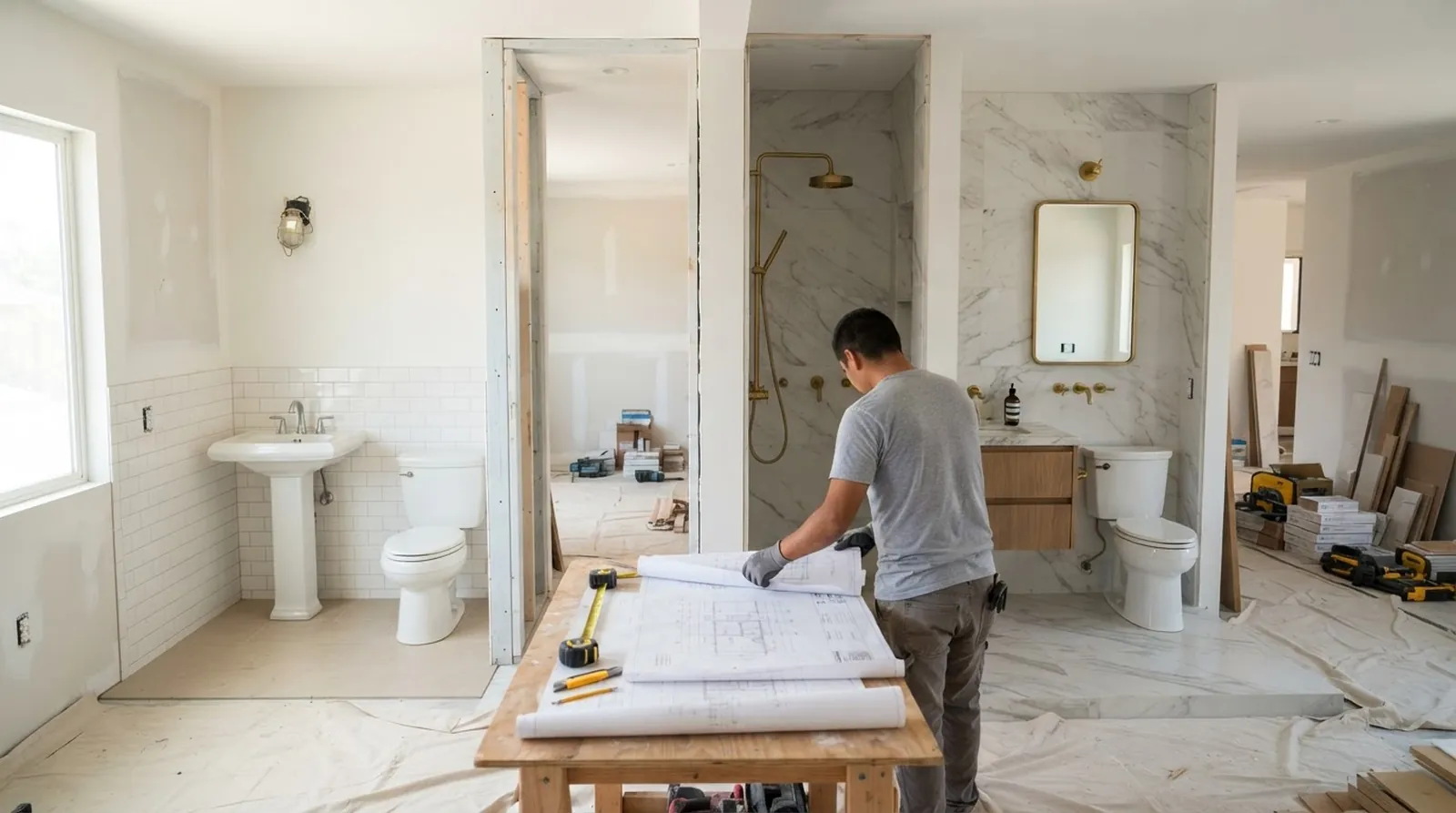
You have decided to update your master bath. You invite three contractors to look at the space, explain your vision, and wait for the proposals. When the emails arrive, the numbers are shocking. One estimate feels surprisingly low, another seems reasonable, and the third is nearly double the first. You might wonder if someone made a math error, if they misunderstood your design goals, or if one company is simply trying to overcharge you. This initial confusion is a very normal part of the planning process.
This wide spread is incredibly common in Los Angeles. A bathroom renovation is a complex project packed into a tiny footprint, requiring plumbers, electricians, tile setters, and carpenters to work in a confined area. Because so many variables exist, two professionals can look at the exact same room and submit completely different numbers based on their assumptions about materials, structural needs, and local requirements. A minor difference in how they interpret your requests can lead to a massive difference in the final calculation.
Understanding what drives these costs is the first step in making a confident decision. LA Premier Builders is an independent matching service that helps homeowners compare options. We match homeowners with contractors, with no pressure. By breaking down the factors that influence pricing, you can learn how to read a proposal and figure out which one actually aligns with your goals. Once you know what to look for, you can ask the right questions and ensure everyone is bidding on the exact same vision.
The Impact of Finish Levels on Your Budget
The most obvious reason for a price gap is the quality of materials and the labor required to install them. Contractors generally categorize projects into standard, premium, and luxury finish levels. A standard finish uses off the shelf vanities, basic ceramic tile, and fiberglass shower pans. These materials are readily available at local supply stores and are straightforward to install, keeping both material and labor costs on the lower end of the spectrum. When a bidder assumes you want a standard finish, their number will naturally be the lowest of the group.
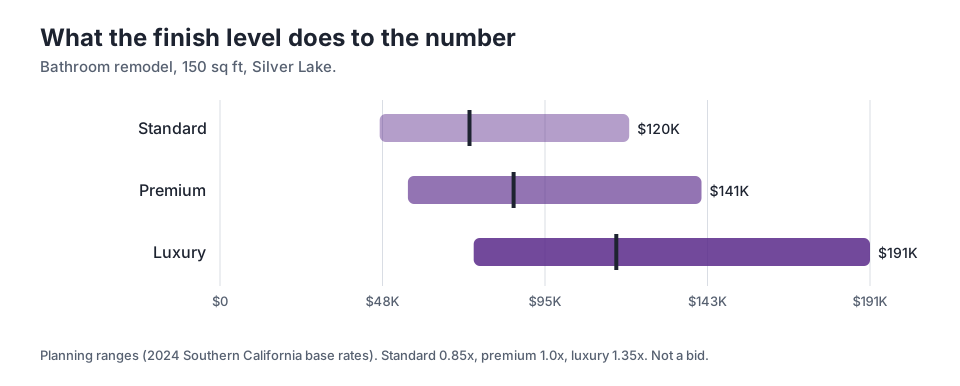
Moving up to a luxury finish changes the entire equation. Luxury projects often feature custom built cabinetry, natural stone slabs, and intricate tile patterns that require specialized artisans to install correctly. If you look at planning ranges for a 150 sq ft bathroom, a standard finish might have a mid-point around $73K. But if you upgrade to a luxury finish, that mid-point jumps to $116K. The jump in price reflects both the expensive materials and the highly skilled labor needed to handle them without causing damage.
The difference is not just the price tag on the faucet. High end materials demand significantly more prep work behind the walls. Large format marble tiles require perfectly level walls and floors, which means the framing and drywall phases take much longer to complete. When one bidder assumes you want a standard finish and another assumes you want luxury, the resulting proposals will look like they are for two completely different houses. Clarifying your finish expectations early prevents this type of misalignment.
- Standard finishes rely on mass produced components that save time.
- Premium finishes introduce better materials with moderate installation complexity.
- Luxury finishes require specialized labor and extensive surface preparation.
How Geography Alters the Baseline Cost
Your zip code plays a massive role in what you will pay for a renovation. Los Angeles is a patchwork of different municipalities, each with its own building department, permitting fees, and local regulations. A contractor must factor in the time they will spend dealing with city planners and inspectors. In some cities, getting a permit is a quick over the counter process, while in others, it requires weeks of revisions and multiple in person meetings. The administrative burden is directly passed on to the homeowner in the form of higher project costs.
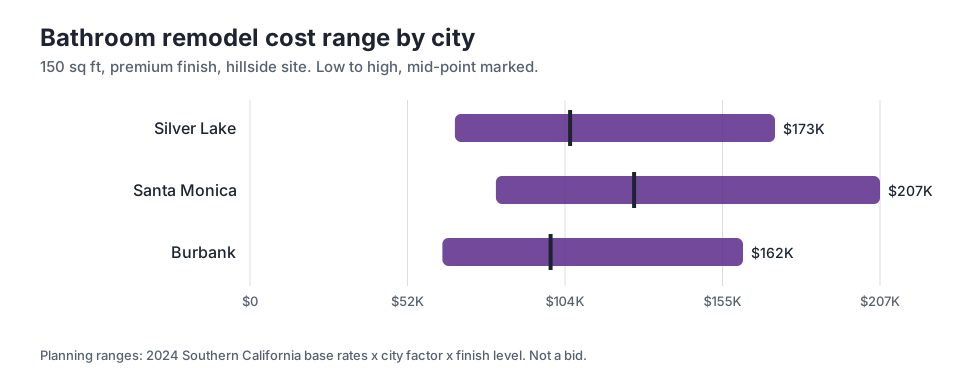
Beyond the bureaucracy, local market dynamics influence labor rates. Contractors operating in high cost coastal areas often carry higher overhead for their own facilities, insurance, and workforce compensation. For example, the mid-point in Burbank is $99K. Take that exact same project to Santa Monica, and the mid-point rises to $126K. The physical work might be identical, but the cost of doing business in a premium zip code changes the baseline for every single trade involved in the project.
Logistics also change dramatically by neighborhood. Narrow winding streets in the hills make it difficult to park work trucks, place dumpsters, or deliver heavy materials. If a crew has to park three blocks away and carry heavy boxes of tile up a steep driveway, the job will take more days to complete. Bidders who know the neighborhood well will price these logistical hurdles into their proposals, while a less experienced bidder might miss them entirely, resulting in a low bid that eventually leads to frustrating delays and unexpected extra charges.
Hidden Site Conditions and Structural Surprises
What lies behind your drywall is a complete mystery until demolition begins. Older homes in Los Angeles often hide outdated plumbing, obsolete wiring, or previous water damage that was simply covered up by the last owner. When contractors walk through your home for an initial consultation, they have to make educated guesses about what they will find once the walls are open. How they choose to handle those unknowns in their pricing model is a major reason why estimates can look so different from one another.
A conservative bidder will include contingency funds or specifically outline the cost of replacing old galvanized pipes with modern copper. They know that bringing the room up to current building codes will require extra work, and they want you to be prepared for that reality. A more aggressive bidder might leave those costs out of the initial proposal entirely to make their number look attractive. They plan to issue change orders once the demolition reveals the inevitable problems, which means their low initial bid is largely an illusion.
Hillside construction adds another significant layer of complexity to the bidding process. If your home is perched on a slope, the foundation supporting the bathroom might need retrofitting to handle the weight of a new cast iron tub or a heavy stone shower enclosure. Structural engineers must be brought in, and the floor joists must be reinforced. Contractors who specialize in hillside properties will always bid higher because they understand the structural demands involved and the specialized equipment required to work safely on a steep incline.
Scope of Work and Detailed Inclusions
Two bids can vary wildly simply because they are not actually offering the same scope of work. One proposal might be a comprehensive document that includes everything from demolition and waste disposal to the final coat of paint and the installation of towel bars. The other might just cover the rough construction, leaving you responsible for buying all the fixtures, tiles, and lighting out of your own pocket. If you only look at the bottom line number, you might mistakenly think the second option is a much better deal.
It is crucial to read the fine print to see exactly who is responsible for what. Does the bid include the cost of pulling permits, or is that an extra fee you have to pay the city directly? Does it cover the rental of a portable toilet for the workers, or will they be using your guest bathroom for the duration of the project? When a number looks too good to be true, it almost always means essential phases of the project have been completely excluded from the bottom line calculation.
The level of project management also dictates the final price. A company that provides a dedicated project manager who is on site every day to coordinate deliveries and supervise the trades will naturally charge more than a solo operator who checks in once a week. You are paying for communication, scheduling efficiency, and the peace of mind that someone is actively driving the project forward. This oversight keeps the job on schedule and prevents costly mistakes, making it a valuable inclusion for homeowners who cannot supervise the work themselves.
The Impact of Business Overhead and Insurance
Running a legitimate construction business in California is an expensive endeavor. Companies must pay for workers compensation insurance, general liability policies, commercial auto insurance, and state licensing fees. These fixed costs are distributed across all their active projects. A well established business with proper coverage will naturally have higher bids than someone working out of the back of their truck with minimal insurance. The higher price tag is a direct reflection of a company operating by the book and protecting both their employees and their clients.
While it might be tempting to go with the lowest bidder to save money, that choice often comes with significant hidden risks. If an uninsured worker is injured in your home, or if a plumbing mistake floods your downstairs living room, a company without adequate liability insurance leaves you financially vulnerable. You could end up paying out of pocket for damages or medical bills. The higher bid is often reflecting the cost of protecting your property and providing a safety net in case something goes wrong during construction.
Established businesses also invest heavily in customer service infrastructure. They might have a showroom where you can select materials, a design team to help you visualize the space, and administrative staff to handle the complex permitting paperwork. This overhead increases their daily operating costs, but it also provides a much more organized and supportive experience for the homeowner. When you pay a higher premium, you are often buying a smoother process, better communication, and a team that is equipped to handle unexpected challenges without causing major delays.
How to Compare Proposals Effectively
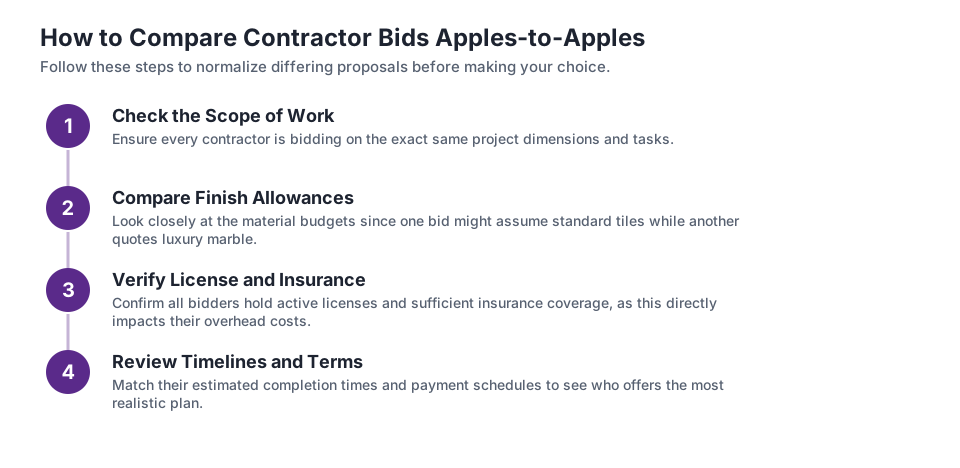
To make sense of varying bids, you need to establish a firm baseline. Start by giving every prospective contractor the exact same information during their initial visit. Create a detailed list of what you want, including specific tile choices, fixture brands, and layout changes. When everyone is pricing the same materials and the same scope of work, the numbers will naturally group closer together, making it much easier to spot the outliers. A detailed scope of work eliminates the guesswork that causes bids to fluctuate so wildly.
When you review the documents, pay close attention to the allowances. An allowance is a placeholder budget for items you have not yet selected. If one bidder puts a small allowance for a vanity and another puts a massive allowance, their final totals will look very different, even though the labor cost might be identical. Ask them to adjust their allowances to reflect your actual tastes so you can see a realistic projection of what you will actually spend before signing a contract.
This is where a matching service proves incredibly valuable for homeowners. LA Premier Builders helps you connect with vetted professionals so you can gather multiple perspectives on your renovation. We match homeowners with contractors, with no pressure. By comparing detailed, itemized proposals from qualified companies, you can confidently choose the right fit for your budget and your home. Taking the time to understand the variables ensures you are making an informed decision rather than just picking the lowest number and hoping for the best outcome.
Key takeaways
- The quality of materials and the complexity of their installation are major drivers of price differences in any renovation.
- Local permitting requirements, labor rates, and logistical challenges like hillside parking will change the cost based on your city.
- Bids often vary because one includes comprehensive project management and full insurance coverage, while another does not.
- Always provide the exact same project details to every bidder to ensure you are comparing apples to apples.
Questions
Frequently asked questions
Why would one estimate be half the price of the others?
A drastically low estimate usually means the scope of work is incomplete. The bidder might have excluded the cost of finish materials, left out necessary structural repairs, or failed to include local permit fees.
Should I always throw out the highest bid?
Not necessarily. The highest bid often includes a very detailed scope of work, high quality project management, and realistic allowances for premium materials. It might be the most accurate reflection of what the project will actually cost.
How do allowances affect the final contract price?
Allowances are placeholder numbers for materials you have not picked out yet. If the allowance is set too low, your final out of pocket cost will increase significantly once you start shopping for fixtures and tile.
Does a hillside home always cost more to remodel?
Yes, hillside homes typically require more complex structural engineering, specialized foundation work, and present difficult access for material deliveries, all of which add time and labor costs.
How can I make sure I am comparing bids fairly?
Give every professional the exact same written description of your project, including specific material choices if possible. Ask them to itemize their proposals so you can compare the labor and material costs for each phase side by side.
Take the next step
Describe your project and see how matching works, with no pressure.