home / guides/why-do-licensed-contractors-cost-more-in-los-angeles
Contractor Hiring Guide · November 3, 2026 · 8 min read
Why Do Licensed Contractors Cost More in Los Angeles?
Understand what a California contractor license actually means and why legitimate bids reflect the true cost of insured, permitted work in Los Angeles.

You finally decide to renovate your Los Angeles home. You invite a few professionals over to look at the space, discuss your vision, and submit their proposals. A few days later, the bids arrive in your inbox. Two of them are fairly close in price, while the third is dramatically lower. It is tempting to jump at the cheapest option, especially when construction feels so expensive.
That large price gap usually comes down to one thing: whether the professional operates a legitimate, licensed business. A California contractor license is not just a piece of paper or a formality. It represents a specific set of legal and financial protections that shield you from liability. When a bid seems too good to be true, it often means the bidder is cutting corners on the very things that keep your property safe.
Understanding what goes into a legitimate bid helps you make an informed decision. The true cost of construction includes workers compensation, liability insurance, permits, and proper project management. As an independent matching service, LA Premier Builders helps homeowners compare and choose the right professionals for their specific needs. We match homeowners with contractors, with no pressure, so you can evaluate your options clearly.
What a State License Actually Means
The state board regulates the construction industry in California to protect consumers. To obtain a license, a professional must pass trade and law exams, undergo background checks, and secure a contractor bond. This bond provides a small financial safety net if the professional fails to complete the work or violates state regulations. While a bond is not a comprehensive insurance policy, it is the first layer of accountability that separates legitimate businesses from informal operators.
More importantly, a licensed professional who brings employees onto your property must carry workers compensation insurance. Construction is physically demanding work, and accidents happen even on well-managed sites. If an uninsured worker falls off a ladder or injures their back while carrying materials in your living room, you could be held financially responsible for their medical bills and lost wages. Workers compensation shifts that heavy financial burden away from the homeowner and onto the business.
General liability insurance is another critical component of a legitimate operation. This coverage protects your home if the crew accidentally damages your property during the project. For example, if a plumber fails to cap a pipe correctly and floods your newly installed hardwood floors, liability insurance covers the repair costs. Unlicensed operators rarely carry these expensive policies, leaving you to pay out of pocket for their mistakes.
The Real Cost of Doing Things Right
When you look at a bid from a legitimate business, you are paying for the actual materials and labor, plus the overhead required to run a safe operation. Licensed professionals pay taxes, maintain commercial insurance policies, and manage payroll for their employees. They also spend time navigating complex local building codes and pulling the necessary permits for your project. All of these administrative and legal requirements add up, which is why their proposals look so different from someone working out of the back of their truck.
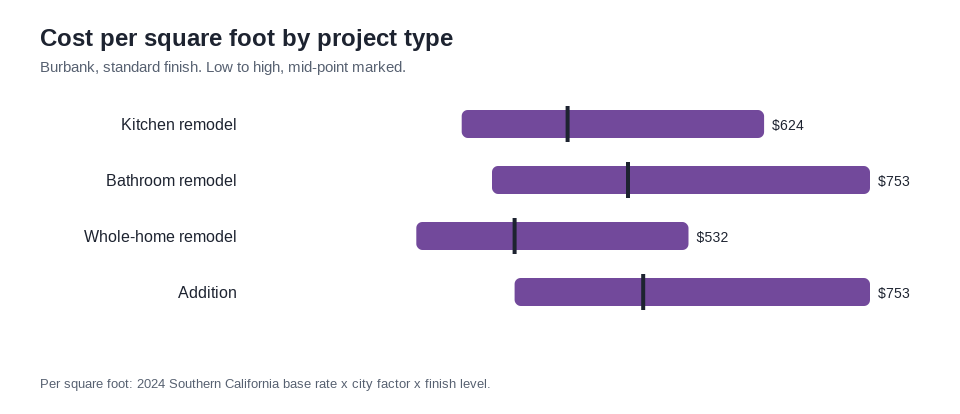
You can see how these costs translate into real-world planning figures. For example, the chart shows that a standard finish kitchen remodel in Burbank has a mid-point planning cost of $386 per square foot, while the high end reaches $624. These numbers reflect the reality of hiring insured professionals who pull permits and manage the job properly. A lowball bid that ignores these realities will inevitably lead to surprise costs later.
Permitted work also requires a higher standard of craftsmanship. City inspectors will visit your home at various stages of the project to ensure the framing, electrical, and plumbing meet current safety codes. A legitimate professional prices the job knowing they must pass these inspections. An unlicensed operator might offer a lower price because they plan to skip the permit process entirely, leaving you with substandard work hidden behind your drywall.
The Financial Risks of Cutting Corners
Hiring an unlicensed operator might save you money upfront, but it exposes you to severe financial risks. Without the oversight of city inspectors, you have no way of knowing if the electrical wiring is safe or if the structural beams can support the weight of your roof. Faulty wiring can cause fires, and poor plumbing can lead to slow leaks that destroy your foundation over time. Fixing these hidden disasters often costs far more than doing the job right the first time.
Unpermitted work can also create major complications when you try to sell your home. Real estate transactions require disclosures, and buyers will ask to see the permits for any major renovations. If you cannot produce those documents, the buyer might demand a steep discount, or the lender might refuse to finance the property. You may even be forced to tear open walls so city inspectors can verify the work after the fact.
Furthermore, you have very little legal recourse if an unlicensed operator walks off the job with your deposit. The state board has limited power to help consumers who knowingly hire unlicensed individuals. You would have to pursue the matter in civil court, which is expensive and time-consuming. A licensed professional has their livelihood tied to their license, giving them a strong incentive to resolve disputes and finish the project as agreed.
Navigating Local Building Departments
Another reason legitimate bids cost more is the time required to navigate local building departments. Every city in Los Angeles County has its own process for reviewing architectural plans and issuing permits. A professional must factor this administrative time into their overhead. They often spend hours waiting at the city planning desk, responding to revision requests, and coordinating with structural engineers to satisfy the local inspectors.
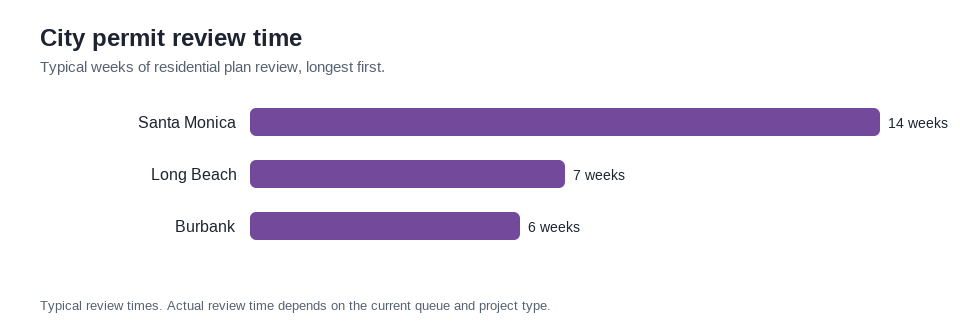
The timeline for these reviews varies wildly depending on where you live. As the chart illustrates, you might face 14 weeks of city plan review in Santa Monica, whereas the same process might only take 6 weeks in Burbank. A legitimate business understands these local nuances and builds realistic timelines into their proposals. They do not make false promises about starting construction tomorrow when they know the city will take months to approve the plans.
While waiting for permits can be frustrating, it is a necessary part of a safe renovation. The plan review process ensures your project complies with zoning laws, energy efficiency standards, and seismic safety requirements. A bid that promises an impossibly fast start date is a major red flag. It usually indicates the person intends to bypass the city entirely, putting your property and your safety at risk.
Understanding the Complete Renovation Schedule
A realistic timeline is just as important as a realistic budget. Legitimate professionals map out the entire process from the initial design phase to the final occupancy permit. They coordinate subcontractors, order materials in advance, and schedule city inspections at the appropriate milestones. This level of project management requires skill and experience, and it is a major factor in the overall cost of the job.
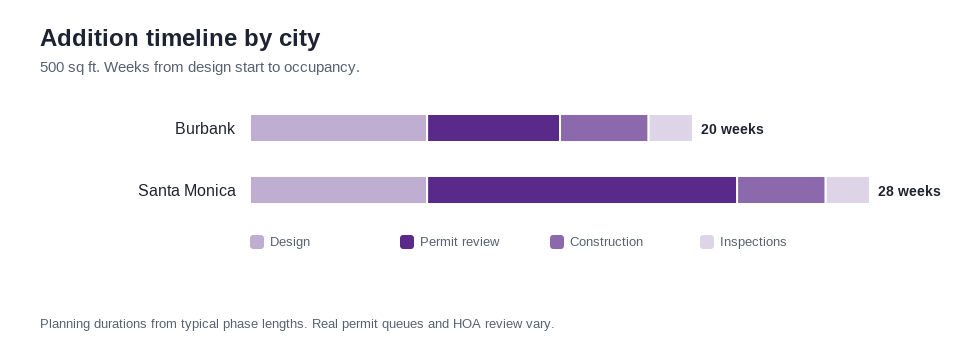
Looking at the data for a 500 sq ft addition, you can see how the different phases stack up. In Burbank, the total from design start to occupancy is 20 weeks. However, because of the longer permit review process mentioned earlier, the exact same project in Santa Monica takes 28 weeks. A professional bidder will explain these phases to you, ensuring you understand exactly how long your home will be under construction.
When a bidder gives you a timeline that seems incredibly fast, ask them to break it down. Ask how long they expect the design to take, how much time they have allocated for city review, and how many weeks the actual construction will require. If they cannot provide a clear, phased schedule, they are likely guessing. Guesswork leads to delays, frustration, and unexpected costs as the project drags on far longer than promised.
Comparing Apples to Apples
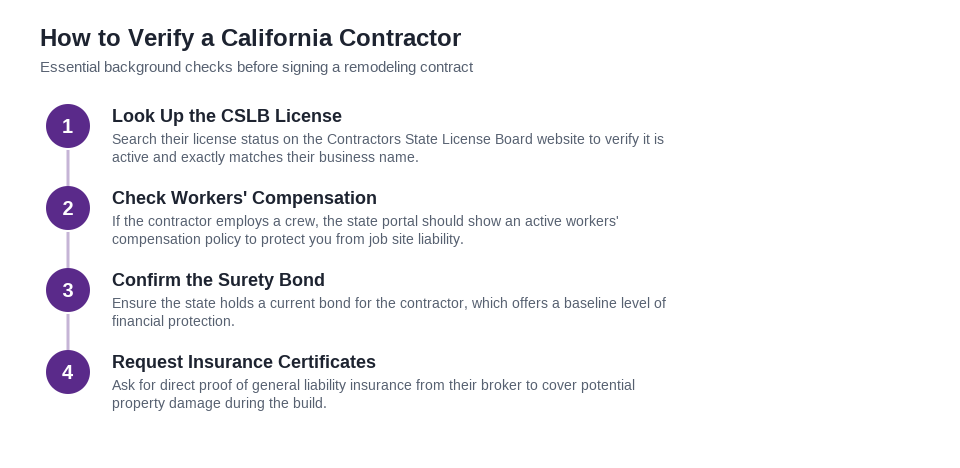
When you have multiple bids on the table, you need a systematic way to evaluate them. Start by verifying the license status of every person who submitted a proposal. You can look up their information on the state board website to ensure their license is active and in good standing. Check if they have any disciplinary actions on their record and verify that they carry the required workers compensation insurance.
Next, read through the scope of work detailed in each proposal. A legitimate bid will list the specific materials, the exact tasks to be performed, and the payment schedule. If one bid is a single page with a lump sum at the bottom, while another is a ten-page document detailing every fixture and finish, you are not comparing apples to apples. The detailed bid is almost always the safer choice.
Pay close attention to the payment terms. State law prohibits contractors from asking for a large down payment before work begins. The initial deposit should be a small percentage of the total project cost. If a bidder demands half the money upfront to buy materials, walk away immediately. Legitimate businesses have the credit and cash flow to purchase materials and start the job without relying entirely on your deposit.
Making a Confident Hiring Decision
Choosing the right professional for your renovation is a major decision that requires careful thought and research. You want someone who communicates clearly, respects your property, and operates a legitimate, insured business. Price is always an important factor, but it should never be the only factor. The cheapest option often ends up being the most expensive if the work has to be torn out and redone.
This is where an independent matching service can be incredibly helpful. LA Premier Builders helps homeowners compare and choose the right professionals for their specific projects. We do not build, employ crews, or hold a contractor licence ourselves. Instead, we match homeowners with contractors, with no pressure, allowing you to review your options in a neutral environment. Our goal is to provide the information you need to make a confident choice.
Take your time during the evaluation process. Ask questions about insurance, request to see past projects, and call their references. A legitimate professional will gladly provide this information and will appreciate that you are taking the process seriously. By understanding what a license means and why proper bids cost more, you set yourself up for a successful, safe, and legal home renovation.
Key takeaways
- A state license requires the business to carry a bond and workers compensation insurance, protecting you from heavy financial liability if an accident occurs on your property.
- Legitimate bids reflect the true cost of doing business, including taxes, commercial insurance policies, and the administrative time required to pull city permits.
- Unpermitted work might seem cheaper initially, but it can lead to dangerous structural issues, fire hazards, and severe complications when you try to sell your home.
- City plan reviews add significant time to your project schedule, and a realistic bid will account for these local administrative delays rather than promising an impossibly fast start.
Sources
- Contractors State License Board
- California Department of Insurance
Questions
Frequently asked questions
Why is there such a large price difference between licensed and unlicensed bids?
Licensed businesses pay for workers compensation, general liability insurance, taxes, and permit fees. Unlicensed operators skip these legal requirements, which lowers their price but shifts all the financial and legal risk onto the homeowner.
What happens if an uninsured worker gets hurt at my house?
If you hire an unlicensed and uninsured operator, you could be held personally liable for the injured worker's medical bills and lost wages. Workers compensation insurance protects you from this financial burden.
Can I pull the building permits myself to save money?
While homeowners can legally pull permits as an owner-builder, doing so makes you the general contractor in the eyes of the law. You assume all liability for the project, including site safety and the quality of the work.
How do I verify that a license is actually active?
You can look up the business name or license number on the state board website. The database will show you if the license is active, if they have workers compensation insurance, and if there are any disciplinary actions.
Does a higher bid mean I will get better quality work?
A higher price does not automatically equal better quality, but a bid that is drastically lower than the others usually indicates missing insurance, unpermitted work, or excluded materials. Always compare the detailed scope of work, not just the final price.
Take the next step
Describe your project and see how matching works, with no pressure.