home / guides/how-material-allowances-impact-kitchen-remodel-costs-in-la
Kitchen Remodeling · November 11, 2026 · 8 min read
How Material Allowances Impact Kitchen Remodel Costs in LA
Learn how standard, premium, and luxury material allowances affect your kitchen remodel budget and change orders before you hire a Los Angeles contractor.
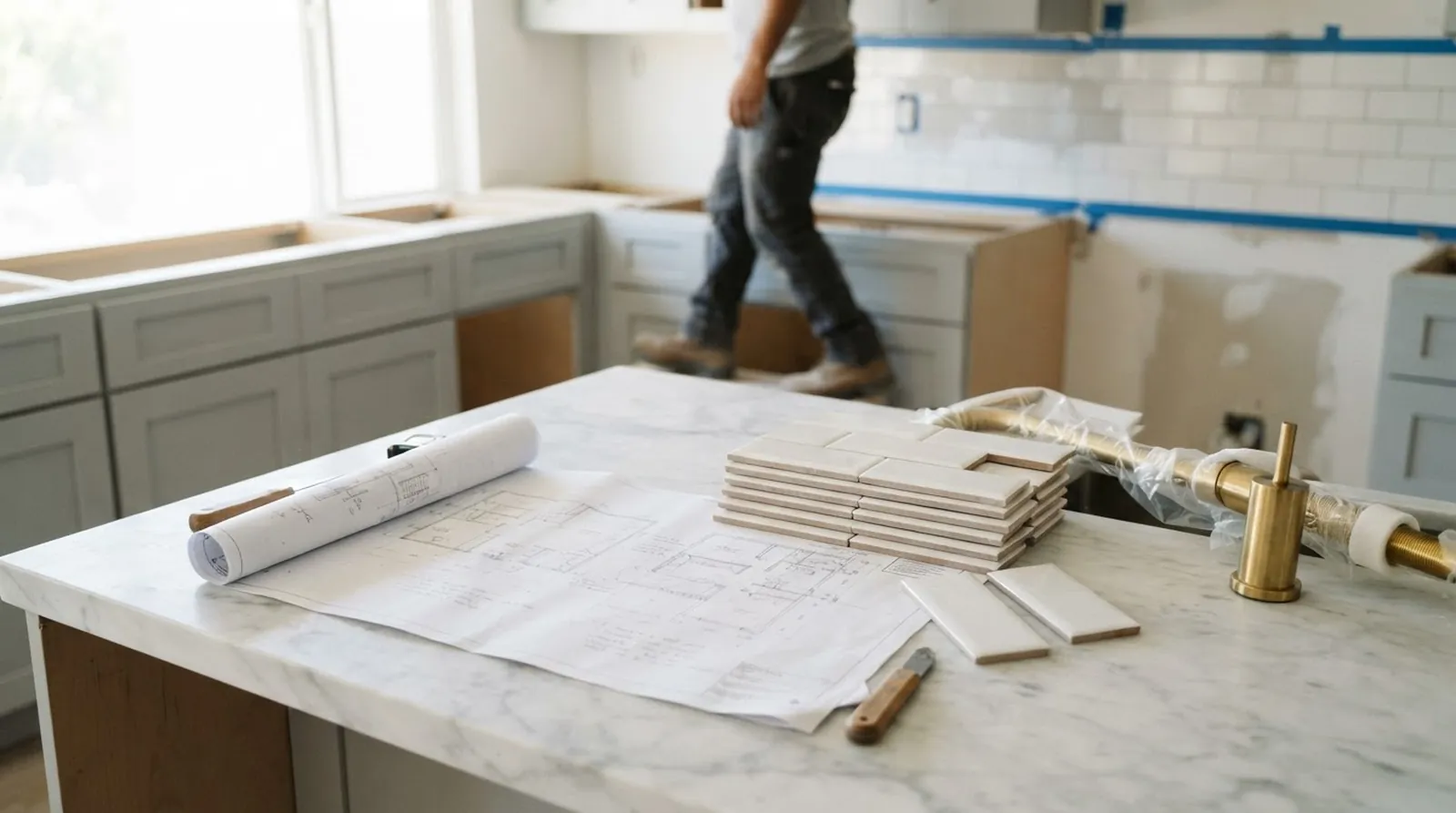
When you start gathering bids for a Los Angeles kitchen remodel, you will quickly notice that the total price depends heavily on a line item called a material allowance. This is a placeholder number the contractor uses to estimate the cost of your cabinets, countertops, tile, and plumbing fixtures before you have actually picked them out. If you do not understand how these allowances work, you might sign a contract thinking you are getting a high end kitchen, only to find out the budget only covers basic builder grade materials that do not match your vision.
At LA Premier Builders, we are an independent contractor matching service. We do not perform construction, employ crews, or hold a contractor license. Instead, we help homeowners compare and choose the right professionals for their project with no pressure. Over time, we have seen how confusing material allowances can be for first time renovators and seasoned investors alike. Many people simply look at the final number on the bid without realizing that the allowance figures are doing the heavy lifting to keep that number artificially low.
The allowance amount directly dictates your finish level, whether standard, premium, or luxury. If your taste exceeds the placeholder amount in your contract, you will end up paying the difference through a change order later in the project. Understanding these tiers before you sign anything is the most effective way to keep your final costs predictable and avoid stressful financial surprises when you visit the tile showroom.
What Exactly Is a Material Allowance?
A kitchen remodel contract usually splits costs into two main categories to make estimating easier. The first category covers labor and rough materials like drywall, framing wood, plumbing pipes, and electrical wire. The contractor can estimate these costs with high accuracy because they know exactly what goes behind the walls and how long it takes to install. The second category covers finish materials, which are all the items you will see and touch every day, such as the countertops, the cabinet boxes, the drawer pulls, and the kitchen sink.
Because most homeowners have not selected their exact sink, cabinet hardware, or backsplash tile when they sign the initial contract, the contractor includes a material allowance. This allowance acts as a strict budget cap for those finish items. If the contractor sets a low allowance for countertops and you eventually select a rare marble slab that costs much more, you are responsible for paying the difference. The allowance is simply a guess at what you might spend based on an assumed level of quality.
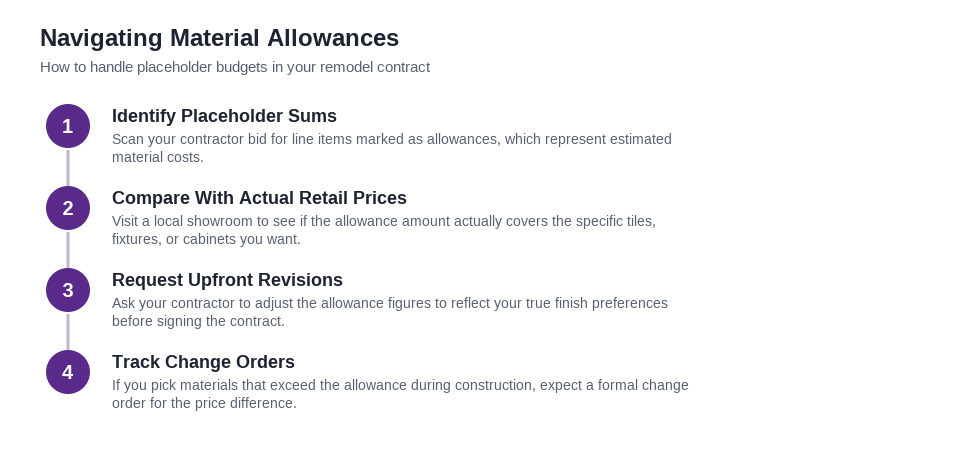
This difference in cost is processed as a change order, which formally amends the original contract price and increases your final bill. Many homeowners assume a low bid means a cheap remodel, but often it just means the contractor used very low material allowances to make the bottom line look attractive. When you finally go shopping for finishes, those low allowances evaporate quickly, driving up the real cost of the project until it matches or exceeds the bids that looked more expensive on the very first day.
The Standard Finish Level and Its Limits
Standard finish allowances represent the entry level for a kitchen remodel and are common in lower priced bids. These budgets typically cover prefabricated cabinets, basic subway tile, standard quartz or entry level granite countertops, and mass market plumbing fixtures. If you are flipping a rental property or simply want a clean, updated look without spending a fortune on custom details, a standard allowance might be perfectly adequate for your goals. The materials are functional and look new, but they do not offer distinct visual character.
However, standard allowances leave very little room for personalization or customization. You will likely have to choose from a limited palette of cabinet colors and basic hardware styles available at large home improvement stores. If you want features like soft close drawers, pull out pantry shelves, a custom range hood, or a deep farmhouse sink, you will quickly exceed a standard allowance. The key is to ask the contractor exactly what brands and materials the standard budget covers before you agree to the number on the page.
If your vision includes a specific designer look you saw online or in a magazine, a standard allowance will almost certainly lead to a change order. It is far better to ask the contractor to increase the allowance upfront to match your actual tastes. This gives you a much more realistic picture of what you will spend and prevents stressful budget surprises when you visit the tile showroom. An honest conversation about your expectations early on prevents the frustration of feeling nickel and dimed later in the renovation.
Moving Up to Premium Finishes
Premium finish allowances are what most Los Angeles homeowners actually want when they picture a modern, highly updated kitchen. This tier typically includes semi custom cabinetry, higher grade quartz or natural stone countertops, designer plumbing fixtures, and upgraded lighting plans. The premium level gives you the flexibility to choose finishes that feel solid and look distinct without crossing into fully custom, artisanal pricing. You get a space that feels tailored to your home without paying the steep premium required for completely bespoke manufacturing.
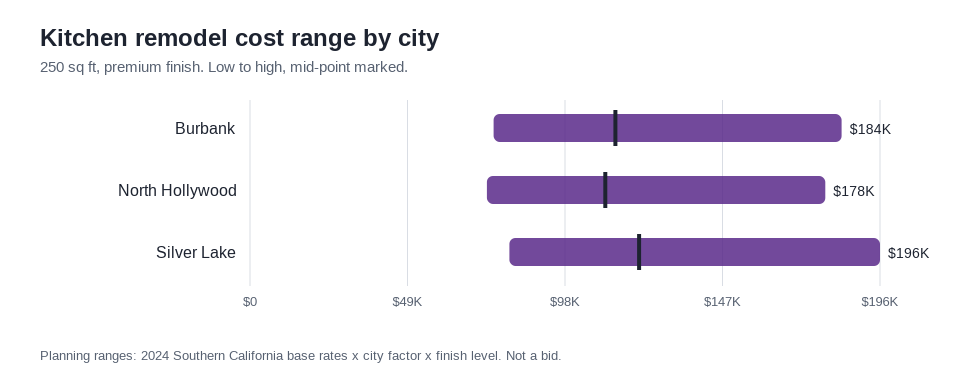
The cost of a premium remodel varies noticeably depending on where you live, mostly due to local labor rates and logistical challenges like street parking or hillside access. For a 250 sq ft kitchen with premium finishes, the mid-point planning range in Burbank is $113,400. If you look at North Hollywood, that mid-point drops slightly to $110,250. Meanwhile, the same premium project in Silver Lake has a mid-point of $120,750. These figures show how geography impacts the labor side of the equation, even when the material allowances stay exactly the same.
These regional differences highlight why you cannot just rely on a single neighborhood average when planning your total budget. The premium allowance itself might buy the exact same cabinets and tile in all three areas, but the baseline cost to install them shifts based on local conditions. When we match you with contractors, we encourage you to look closely at how they balance the labor costs for your specific zip code against the premium material allowances they propose in their initial estimates.
The Luxury Tier and Customization
Luxury finish allowances are designed for homeowners who want completely custom spaces with absolutely no compromises in quality or design. This tier covers fully custom cabinetry built to the exact dimensions of your room, exotic natural stone slabs, professional grade appliances, and handmade artisan tile. In the luxury category, the materials themselves often require specialized installation techniques, which further increases the total cost of the project. A luxury kitchen is a major investment that prioritizes unique aesthetics and high performance over strict budget control.
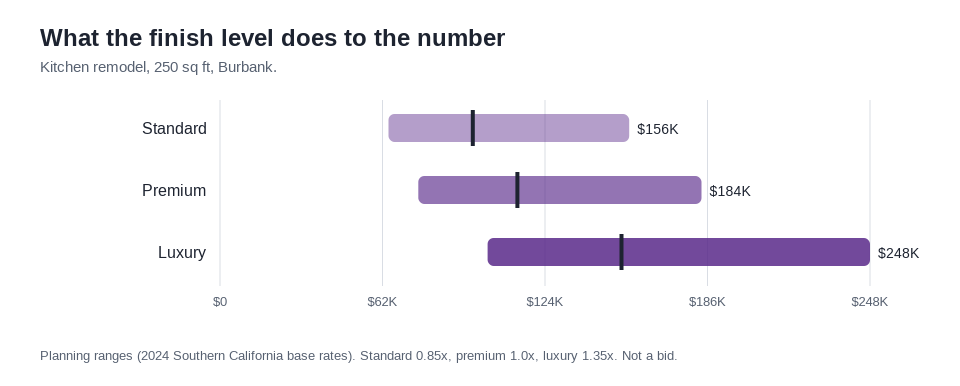
To understand the jump in price, consider the difference between finish levels for a 250 sq ft kitchen remodel in Burbank. A standard finish project has a mid-point of $96,390. Moving up to a premium finish pushes that mid-point to $113,400. But if you want a luxury finish, the mid-point leaps to $153,090. The luxury tier essentially applies a 1.35x multiplier to the baseline cost of the remodel. This multiplier reflects both the high cost of the materials and the intense labor required to install them properly.
That multiplier exists because luxury materials are not just more expensive to buy; they are riskier to handle and take much longer to install. A contractor installing a rare, highly veined marble slab has to take extreme care, and custom cabinets require exact scribing to the walls to ensure a perfect fit. If your contract only includes a premium allowance but you start picking luxury materials, the resulting change orders will cover both the material price difference and the extra labor required to install those high end items.
How Allowances Lead to Change Orders
Change orders are the most common source of friction between homeowners and contractors during a kitchen remodel. A change order is simply a written agreement to modify the original contract, usually adding cost and time to the project schedule. While some change orders happen because of hidden damage like water rot found behind a wall, the vast majority are driven by material allowances that were set too low for the homeowner's actual taste. When you want something better than the allowance covers, you have to pay the difference.
The process usually unfolds when you visit a design center to select your finishes. You might have a flooring allowance that covers basic porcelain tile, but you fall in love with engineered hardwood. The showroom tallies up your selections, sends the invoice to your contractor, and the contractor issues a change order for the overage. If you do this for cabinets, countertops, and fixtures, your total project cost can balloon by tens of thousands of dollars before the demolition phase even begins in your home.
To avoid this scenario, you need to treat the allowance figures in your bids as highly negotiable placeholders. Tell the contractors you interview about your specific material preferences before they write the bid. If you know you want custom inset cabinets and brass hardware, make sure they price the allowance to reflect those exact choices. A higher initial bid with realistic allowances is always safer and more transparent than a low bid packed with standard allowances that you will inevitably exceed once you start shopping.
How to Compare Bids with Different Allowances
When you receive multiple bids for your kitchen remodel, comparing them can feel like reading different languages. One contractor might bid the project much lower than another for the exact same layout. Before you assume the second contractor is just overcharging, you have to look at the material allowances. The first bid might only allow for standard finishes, while the second bid includes realistic premium allowances that actually match the inspiration photos you provided during the consultation.
The best way to compare bids is to ask every contractor to use the exact same allowance numbers across the board. For example, you can tell them all to include the exact same allowance for cabinets and the exact same allowance for countertops. Once the material allowances are standardized across all the bids, you can clearly see what each contractor is actually charging for labor, rough materials, and project management. This strips away the illusion of a cheap bid and reveals the true cost of the work.
As an independent matching service, LA Premier Builders helps you connect with professionals who communicate clearly about these costs. We do not push you toward any specific company, and we do not interfere with your negotiations. Our goal is to make sure you have the information you need to ask the right questions, standardize your bids, and choose a contractor who sets realistic material allowances from the very beginning. Taking the time to understand these numbers now will save you significant stress and financial strain later.
Key takeaways
- Material allowances are placeholder budgets for finish items like cabinets, countertops, and tile before you make your final selections.
- Standard allowances cover basic materials, while premium and luxury allowances provide room for semi custom and fully custom finishes.
- Exceeding the allowance amount in your contract is the most common reason for expensive change orders during a kitchen remodel.
- Standardizing the allowance amounts across all the bids you receive is the only way to accurately compare the underlying labor costs.
Questions
Frequently asked questions
What happens if I spend less than my material allowance?
If you select finishes that cost less than the allowance amount in your contract, the contractor will issue a deductive change order, crediting the difference back to your final bill.
Do material allowances include the cost of installation?
Usually, material allowances only cover the purchase price of the item and the taxes. The labor to install the item is typically calculated in the main body of the contract, though luxury materials might require extra labor costs.
Can I buy my own finish materials instead of using an allowance?
Many contractors allow you to purchase your own finish materials, removing the allowance from the contract entirely. However, you then become responsible for ensuring the correct quantities arrive on site exactly when the installation crew needs them.
Why do bids for the exact same kitchen vary so much?
Bids vary because contractors estimate labor differently and often use different material allowance tiers. A bid using standard allowances will always look much cheaper upfront than a bid using premium or luxury allowances.
Does LA Premier Builders set the material allowances for my project?
No. We are an independent matching service that connects homeowners with contractors. We do not perform construction, hold a contractor license, or set pricing. You will negotiate the allowances directly with the contractors you interview.
Take the next step
Describe your project and see how matching works, with no pressure.