home / guides/spotting-red-flags-in-silver-lake-kitchen-bids
Kitchen Remodeling · November 14, 2026 · 6 min read
Spotting Red Flags in Silver Lake Kitchen Bids
Learn how to spot missing scope and unrealistic timelines in suspiciously low kitchen remodel bids using local Silver Lake cost and schedule averages.

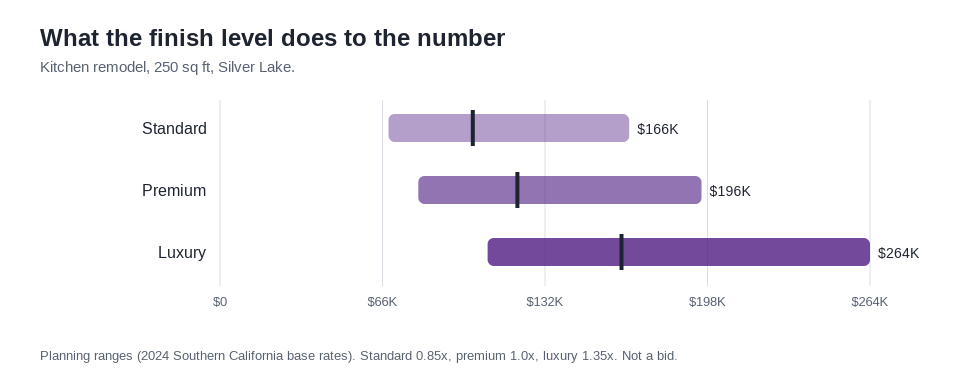
A suspiciously low proposal for a kitchen remodel often hides missing work or relies on an unrealistic schedule. If you are planning a 250 sq ft project in Silver Lake, understanding local averages helps you spot these gaps before you sign a contract. For example, a mid-point premium finish runs around $121K. A bid that comes in drastically lower usually omits essential plumbing upgrades, sets inadequate material budgets, or ignores the slow reality of municipal approvals.
LA Premier Builders matches homeowners with independent contractors, allowing you to compare proposals side by side. We see how lowball bids tempt homeowners, only to result in frustrating delays and expensive change orders. By learning how to read between the lines of a cheap proposal, you can protect your budget and choose a professional who sets honest expectations from the start.
The Danger of Low Material Allowances
Contractors sometimes win jobs by quoting basic finishes, even if you explicitly requested custom cabinetry and natural stone countertops. The gap between finish levels changes your final price significantly. A luxury finish mid-point sits at $163K, while a standard finish mid-point is $103K. If a bidder assumes standard materials to keep their initial price attractive, the proposal will look like a bargain.
A cheap bid frequently includes tiny allowances for tile, plumbing fixtures, and appliances. An allowance is a placeholder budget. Once you start shopping for the specific items you actually want, you will have to pay the difference out of pocket. This tactic shifts the cost from the initial proposal to the middle of the project, making the low bid an illusion.
Always check the specific allowance lines in your proposal. If the number for appliances seems too low to buy the refrigerator and range you have in mind, ask the contractor to revise the bid. A transparent professional will update the numbers to reflect your actual tastes, giving you a realistic picture of your total investment.
Spotting Unrealistic Timelines
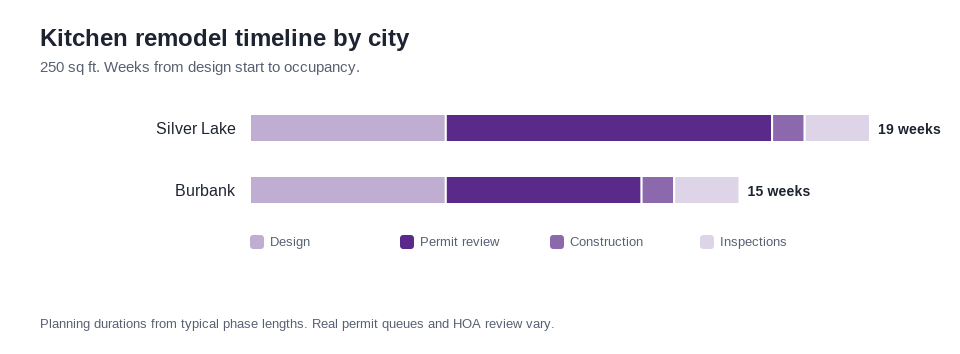
A fast schedule sounds appealing but often ignores the reality of local municipal processes. In Silver Lake, the total from design start to occupancy is 19 weeks. A contractor promising to finish your project in a fraction of that time might be skipping crucial planning steps or ignoring the inevitable delays at the city building department.
Permit review alone takes 10 weeks in this area. Compare that to Burbank, where permit review takes 6 weeks. A contractor used to working in faster municipalities might apply those shorter expectations to your project. This sets you up for deep frustration when your home sits empty waiting for city approvals that the contractor should have anticipated.
Ask the contractor to break down their schedule into distinct phases. They should account for design, city review, the actual physical build, and final sign-offs. If their timeline lacks a realistic buffer for local administrative hurdles, treat the proposal with heavy skepticism.
Hidden Exclusions in the Scope of Work
A cheap proposal frequently leaves out necessary labor that you will eventually have to pay for. Demolition, debris removal, and hauling fees add up quickly during a major renovation. Some bids exclude these tasks entirely, leaving you to manage dumpsters and disposal fees yourself, which adds unexpected stress and cost to your project.
Plumbing and electrical reroutes represent another common omission. Moving a sink to an island or adding a dedicated circuit for a commercial range requires opening walls and upgrading electrical panels. If your layout changes but the bid only mentions swapping fixtures in their current locations, the scope is fundamentally incomplete.
Read the exclusions list at the bottom of the proposal carefully. A thorough contractor will list exactly what they will not do, clarifying the boundaries of their work. If the exclusions are vague or missing entirely, you risk facing a barrage of unexpected bills once the walls are open and the hidden problems emerge.
The True Cost of Permitting
Securing municipal approvals requires administrative time, drafting detailed plans, and paying city fees. Low bids sometimes shift this burden to the homeowner or assume the work will be done unpermitted. Unpermitted work can complicate future property sales and void your homeowners insurance if a fire or flood occurs.
A proper proposal explicitly states who pulls the permits and covers the associated fees. If the contractor suggests pulling an owner-builder permit, they are asking you to take on the legal liability for the job site and the work quality. This is a massive warning sign that the contractor may lack the proper credentials or insurance.
Verify that the contractor includes the time needed to draw architectural plans and stand in line at the city offices. This administrative effort represents a real cost that legitimate businesses build into their pricing. A bid that ignores this effort is likely cutting corners elsewhere.
A Systematic Approach to Reviewing Bids
Evaluating a proposal requires looking past the final number at the bottom of the page. You need a method to compare bids side by side, ensuring each one covers the exact same scope, materials, and administrative tasks. Missing details in any of these areas will eventually cost you money.
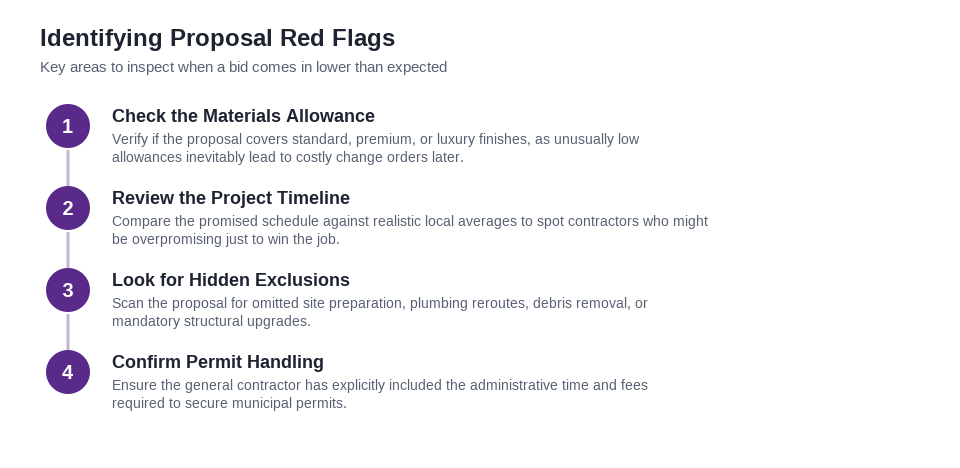
1. Check the Materials Allowance: Verify if the proposal covers standard, premium, or luxury finishes, as unusually low allowances inevitably lead to costly change orders later. 2. Review the Project Timeline: Compare the promised schedule against realistic local averages to spot contractors who might be overpromising just to win the job. 3. Look for Hidden Exclusions: Scan the proposal for omitted site preparation, plumbing reroutes, debris removal, or mandatory structural upgrades. 4. Confirm Permit Handling: Ensure the general contractor has explicitly included the administrative time and fees required to secure municipal permits.
LA Premier Builders helps you gather multiple proposals so you can spot these discrepancies easily. Having several detailed bids makes it much easier to identify the outlier that missed a major component of the job. Comparing apples to apples protects you from deceptive pricing.
Managing Change Orders
Even the most detailed proposal will likely see some changes once construction begins. Discovering hidden water damage behind drywall or deciding to upgrade a lighting fixture mid-project requires a change order. This document adjusts the final price and the timeline to reflect the new scope of work.
A suspiciously low bid often relies on excessive change orders to make the project profitable for the contractor. They get their foot in the door with a cheap initial price, then add heavy fees for things that should have been included from the start. This bait-and-switch tactic turns a cheap bid into an expensive nightmare.
Discuss how the contractor handles unexpected issues before you sign anything. A professional will explain their markup on change orders and promise to get your written approval before doing any extra work. Clear communication about changes prevents disputes and keeps your budget under control.
The Value of Clear Communication
A low bid often correlates with poor communication. Contractors who rush through the estimating process usually rush through the actual construction. If a proposal lacks detail, it shows that the contractor did not spend the time to understand your specific needs or the unique challenges of your home.
Pay attention to how long it takes the contractor to return your calls or answer your questions during the bidding phase. If they are hard to reach now, they will be even harder to reach when your kitchen is torn apart. A detailed, slightly higher bid from a responsive professional often provides much better value than a cheap bid from someone who ignores your emails.
Your relationship with the contractor will last for a long time. Choosing someone who explains their pricing, answers your questions directly, and sets realistic expectations will save you from endless frustration. The cheapest bid rarely results in the most successful project.
Key takeaways
- A suspiciously low bid often omits essential scope like demolition, debris removal, or plumbing reroutes.
- Material allowances must reflect your desired finish level to prevent expensive out-of-pocket upgrades later.
- Local permit review times dictate the schedule, making unusually fast promises a clear warning sign.
- Proposals must explicitly include the administrative time and fees required to secure municipal permits.
Questions
Frequently asked questions
Why do bids for the exact same kitchen vary so much?
Bids vary because contractors interpret your requests differently. One might quote custom cabinets and a full electrical upgrade, while another quotes prefabricated boxes and ignores the necessary wiring changes.
How do I know if a material allowance is realistic?
Ask the contractor for a list of specific items that fit within the allowance. If the budget only covers basic appliances and you want a commercial-style range, the allowance is too low.
What happens if the contractor underestimates the timeline?
You will face extended disruption in your home. An unrealistic schedule often leads to rushed work or periods where no one shows up because the contractor double-booked their crews.
Should the contractor pay for the permits?
The homeowner ultimately pays for the permits, but a legitimate contractor will include the cost of the fees and their administrative time to secure them within the proposal.
How does LA Premier Builders help with comparing bids?
We match you with independent contractors so you can receive multiple proposals. This allows you to compare scope, timelines, and costs side by side without pressure.
Take the next step
Describe your project and see how matching works, with no pressure.