home / guides/what-are-allowances-in-a-remodeling-contract
Remodeling Costs · October 28, 2026 · 7 min read
What Are Allowances in a Remodeling Contract?
Learn how material allowances work in remodeling bids, how finish upgrades impact total costs, and how to handle change orders effectively.
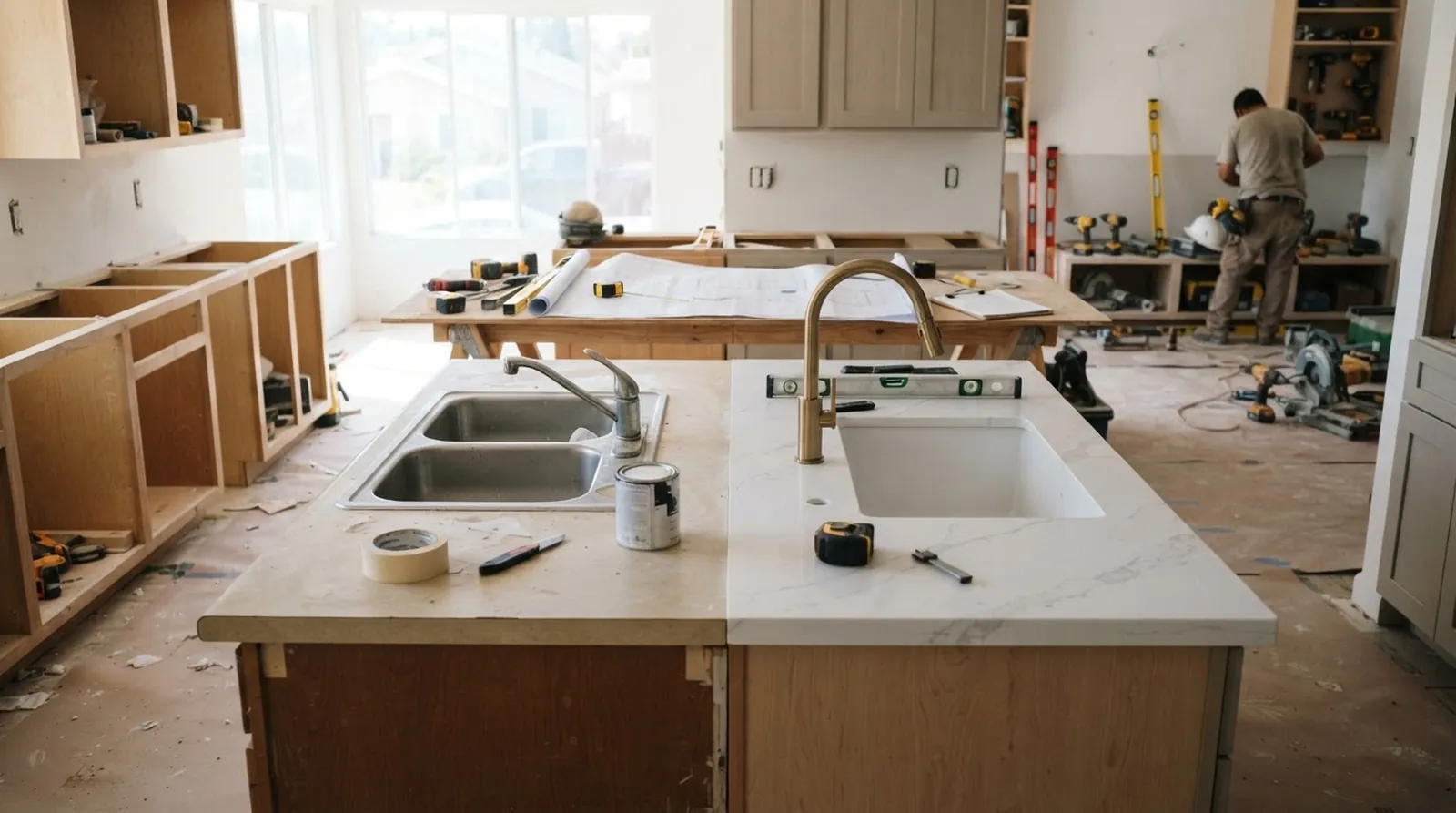
When you receive a bid for a major home renovation, you might expect a single fixed price covering every nail, board and tile. Instead, you will often find line items labeled as allowances. An allowance is simply a placeholder budget for materials you have not yet selected. Because it is impossible to know the exact cost of your kitchen countertops before you choose between basic butcher block and imported marble, the contractor inserts an estimated dollar amount to keep the bidding process moving.
Understanding how these placeholders work is a critical part of evaluating any remodeling proposal. If a contractor sets the allowance too low, their total bid will look incredibly attractive on paper. However, once you visit the showroom and start picking out the fixtures, flooring and cabinets you actually want, those low allowances will quickly evaporate, leaving you responsible for the difference.
As an independent matching service, LA Premier Builders helps homeowners compare proposals from different professionals. We do not employ construction crews or hold a contractor license, but we do help you navigate the paperwork. Knowing how to read material allowances, how finish upgrades impact your bottom line, and how change orders function will protect your budget and keep your project on track.
The Purpose of Material Allowances
Contractors use allowances because most homeowners finalize their design choices after the contract is signed. During the initial bidding phase, you might know you want hardwood floors, but you probably have not selected the exact species, plank width or finish. The contractor needs a way to estimate the total project cost without forcing you to make hundreds of micro-decisions upfront. They calculate the labor required for installation and then add a reasonable placeholder for the cost of the materials themselves.
A well-written allowance should reflect your actual tastes and the general quality level of the home. If you live in a high-end neighborhood and plan to install custom cabinetry, an allowance based on off-the-shelf basic cabinets is going to cause major financial surprises later. The placeholder must be realistic for the scope of work. When you review a bid, you should always ask the contractor what specific products or finish levels they had in mind when calculating those allowance figures.
If you already know exactly what materials you want, you can ask the contractor to remove the allowance and include the exact price of those items in the bid. This creates a fixed-price contract for those specific elements. However, for most large projects, some allowances are inevitable. The goal is not to eliminate them, but to ensure they are funded adequately enough that you can shop for materials without constantly worrying about exceeding the budget.
How Finish Levels Impact Your Budget
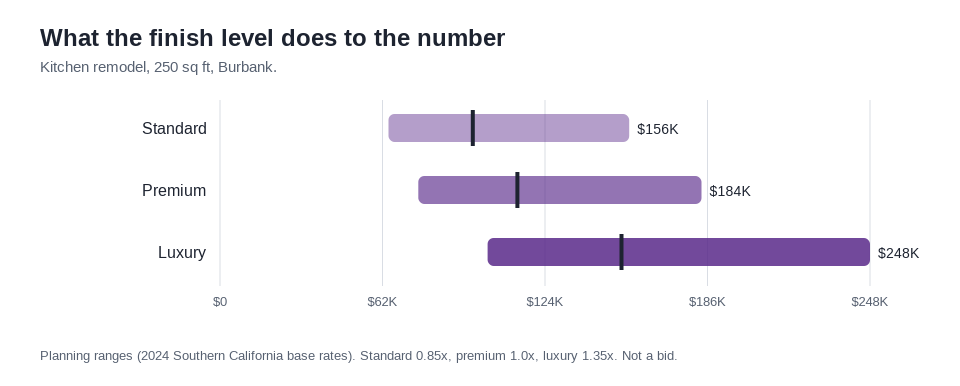
The quality of the materials you select will dramatically shift the final cost of your renovation. Moving from standard finishes to premium or luxury options affects everything from the flooring to the light fixtures. To illustrate this, consider the planning ranges for a 250 sq ft kitchen remodel in Burbank. These figures represent planning ranges rather than a formal bid, but they show how quickly costs escalate when you upgrade your material selections.
For a standard finish, which typically relies on mass-produced materials and basic fixtures, the low end of the planning range is $64K. If you decide to upgrade to a premium finish, which includes higher quality materials and better hardware, the mid-point jumps to $113K. For homeowners who want fully custom cabinetry, rare stone countertops and professional-grade appliances, a luxury finish pushes the high end of the planning range to $248K. The labor to install these items might be similar, but the materials themselves drive the gap.
When comparing bids, you must verify that all contractors are assuming the same finish level. If one contractor assumes a standard finish and another assumes a premium finish, their total bids will be vastly different, even if their labor costs are identical. You can use a multiplier to understand the jump. A standard finish might be a 0.85x multiplier against a baseline, while a luxury finish could be a 1.35x multiplier. Always clarify the assumed finish level before signing a contract.
Planning Cost Per Square Foot
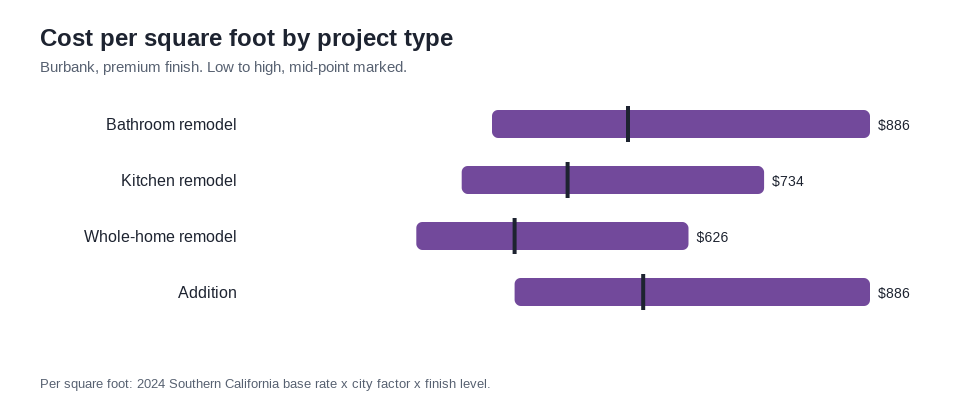
Different types of remodeling projects carry different baseline costs before you even factor in finish upgrades. Rooms that require extensive plumbing, electrical work and specialized labor will always cost more per square foot than general living spaces. When looking at planning ranges for a premium finish in Burbank, the differences between project types become very clear. Wet rooms are consistently the most expensive areas to renovate due to their complexity.
For example, a bathroom remodel has a mid-point planning cost of $540 per square foot. This high concentration of cost is due to the dense packing of fixtures, waterproofing, tile work and plumbing into a very small footprint. A kitchen remodel is slightly less dense, coming in at a mid-point of $454 per square foot. In contrast, a whole-home remodel spreads the expensive wet rooms across a much larger area of relatively inexpensive bedrooms and living rooms, dropping the mid-point to $378 per square foot.
These per-square-foot figures are useful for early planning, but they are not a substitute for a detailed bid with specific allowances. If you are planning an addition, the mid-point is $562 per square foot, which includes the cost of new foundations, framing and roofing. Understanding these baseline costs helps you evaluate whether a contractor is providing a realistic proposal. If a bid comes in significantly below these planning ranges, the material allowances are likely underfunded.
The Danger of Underfunded Allowances
One of the most common pitfalls in remodeling is signing a contract with artificially low allowances. Some contractors use this tactic to make their bid look more competitive, knowing that the homeowner will inevitably choose materials that cost more than the placeholder amount. This practice shifts the financial risk entirely onto the homeowner. Once the project is underway and the walls are open, you have little choice but to pay the difference out of pocket.
To protect yourself, you should treat allowances as a shopping budget. If a contractor provides an allowance for kitchen appliances, go to a local appliance store and see what that amount actually buys. If the allowance only covers a basic white refrigerator and a coil-burner stove, but you want a stainless steel french-door model and a gas range, you know the allowance is underfunded. You will need to ask the contractor to revise the allowance upward to reflect your actual preferences.
It is always better to have realistic allowances upfront, even if it makes the initial bid look higher. A bid with adequately funded allowances gives you a much more accurate picture of what the project will actually cost. If you end up selecting materials that are cheaper than the allowance, the difference is credited back to you. An honest contractor will prefer to set realistic expectations rather than submitting a lowball budget.
Managing Change Orders and Upgrades
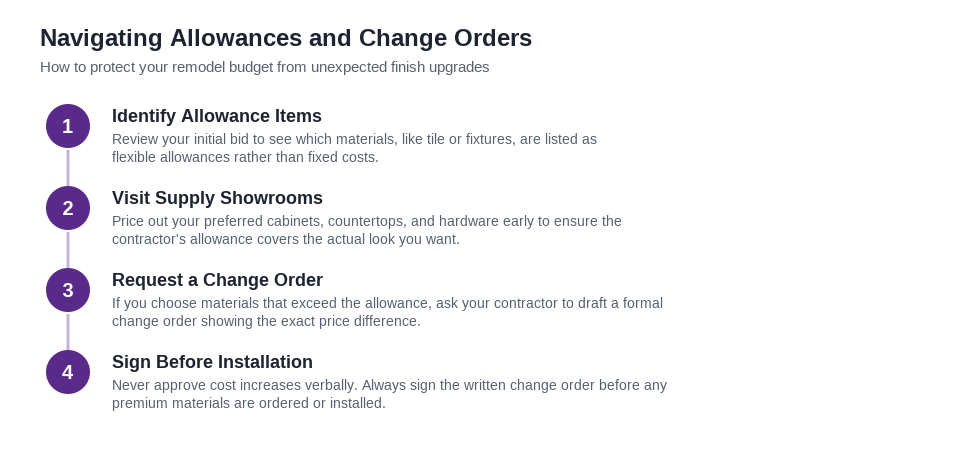
When you select a material that exceeds the allowance amount, the contractor will issue a change order. A change order is a formal written amendment to the contract that details the new material, the additional cost and any impact on the project timeline. You should never agree to an upgrade verbally. Insist that all changes be documented in writing and signed by both parties before the new materials are ordered or installed.
Change orders are a normal part of the remodeling process, but they can quickly derail your budget if you are not careful. In addition to the cost difference for the material itself, the contractor may charge a markup on the overage to cover their administrative time and increased liability. They might also charge additional labor if the upgraded material is more difficult to install. For example, switching from ceramic tile to natural stone requires different setting materials and more specialized labor.
To minimize the stress of change orders, try to make as many material selections as possible before the project begins. The fewer allowances you have in your contract, the less likely you are to encounter unexpected costs. If you do need to use a change order, review it carefully. Make sure it clearly states the original allowance amount, the cost of the new material, any additional labor or markup, and the final amount you owe.
How to Compare Bids with Allowances
Comparing bids that contain different allowance amounts can feel like comparing apples to oranges. To level the playing field, you need to isolate the labor and overhead costs from the material placeholders. Ask each contractor to provide an itemized list of their allowances. If one contractor has a small tile allowance and another has a large tile allowance, the first total bid will look cheaper, but they are not actually offering a better deal.
LA Premier Builders helps homeowners navigate this exact scenario. We match you with independent professionals and help you understand the structure of their proposals, with no pressure to choose any specific company. When evaluating bids, you can ask the contractors to adjust their allowances so they all match. Tell them to use the same allowance amount for cabinets, countertops and fixtures. Once the placeholders are identical, you can see which contractor is actually charging more for their labor and expertise.
Ultimately, the goal is to find a contractor who communicates clearly and sets realistic expectations. A professional who takes the time to explain their allowances and helps you understand the cost implications of your material choices is far more valuable than someone who simply offers the lowest initial price. Take your time, ask questions, and ensure you are comfortable with the budget before moving forward.
Key takeaways
- An allowance is a placeholder budget for materials you have not yet selected, and it must be realistic for your desired finish level.
- Upgrading from standard to premium or luxury finishes will significantly increase your total project cost, even if labor remains the same.
- If you select materials that cost more than the allowance, the contractor will issue a change order for the difference.
- To compare bids accurately, ensure all contractors are using the same allowance amounts for key materials.
Questions
Frequently asked questions
What happens if I spend less than the material allowance?
If the actual cost of the materials is lower than the allowance amount in your contract, the difference should be credited back to you on your final invoice.
Do contractors charge a markup on allowance overages?
Yes, many contractors apply their standard overhead and profit margin to any amount that exceeds the original allowance, which covers their administrative time.
Can I buy the materials myself to avoid allowances?
You can purchase finish materials directly, but contractors generally prefer to handle ordering to ensure correct sizing, manage delivery logistics, and maintain project warranties.
How do I know if an allowance is too low?
The best way to check an allowance is to visit a local showroom and price out the specific items you want to see if the budget covers them.
What is a change order?
A change order is a written amendment to your contract that documents any changes to the scope of work, material costs, or project timeline.
Take the next step
Describe your project and see how matching works, with no pressure.